
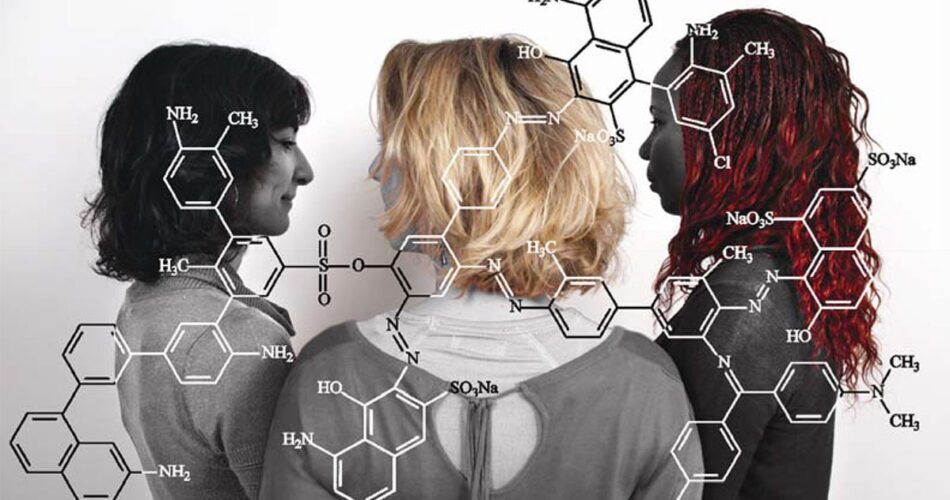
Source: Cover photo of IARC Monograph, Volume 99.
Navigating pregnancy-safe skincare can be complicated, but as a medical doctor with a focus on cosmetic ingredient safety, I’ve simplified the search for you. Visit my Skincare During Pregnancy – Begin Here guide for a full index of ingredient safety reviews, pregnancy and IVF-safe recommendations, and doctor-vetted product guides.
Today is about hair dye safety during pregnancy and nursing.
ACOG states that “Using hair dye during pregnancy is not toxic for your fetus”. And that “Studies on animals show that high doses of these chemicals do not cause serious birth defects.”
The NHS says, “Some studies have found that very high doses of the chemicals in hair dyes may cause harm. However, these doses are massive compared with the very low amount of chemicals you may be exposed to when coloring your hair.”
However, before you rush to color your tresses, understand that:
- There is no definitive evidence about hair dye use in the pregnant human population. Like with any other chemical in pregnancy, it is unethical to experiment on pregnant women, and no woman would volunteer to be a test subject.
- The first 3 months, the first trimester, is when the organs start to form (brain, spine, heart, lungs, hands & feet, liver, kidney, pancreas, genitals, etc.). This is the period when the fetus is most susceptible to harm from smoking, alcohol, illnesses like rubella, and chemical substances.
Quick Navigation
- What are the concerns with using hair dyes?
- Why do health organizations still say it is okay?
- Are plant-based hair dyes any safer?
- The one thing that everyone agrees with?
- What are the other safe options?
- How to dye hair safely when pregnant?
- I am a salon worker. How do I protect my baby?
- Can I dye my hair while breastfeeding?
- Takeaway.
What are the concerns with using hair dyes?

Hair dyes can be temporary (~8-12 washes), semi-permanent (~24 washes), and permanent (till the hair grows out).
The permanent dyes are the ones that are associated with more adverse reactions relative to the other two.
The various concerns raised with hair dyes are about them being potent allergens leading to dermatitis, hair loss, asthma and allergic rhinitis, and different types of cancers.
In the case of use in pregnancy, the following concerns have been raised:
Why do health organizations still say it is okay?
The studies mentioned above come with limitations – these are only observational studies with no interventions (due to ethical concerns), and there are too many other variables like environmental pollutants and other chemicals the women are exposed to that typically cannot be controlled or excluded during such studies.
Some of the chemicals, namely PPD (phenylenediamine), aminophenols, and ethanolamine, are teratogenic (harmful to the fetus) in very high doses in animal experimentation.
In the case of humans, unless there are open wounds on the scalp, these chemicals show very limited systemic absorption. They are said to be unlikely to reach the fetus in amounts significant enough to cause harm.
Besides ACOG and NHS (as highlighted at the top), major cancer centers suggest that there is not adequate evidence to link hair dyeing to fetal damage and cancer.
The International Agency for Research on Cancer (IARC) is the specialized cancer agency of the World Health Organization (WHO). In its 2010 monograph focused on dyes, it came to the following conclusions:
“Cancer in humans
There is limited evidence in humans for the carcinogenicity of occupational exposures among hairdressers or barbers.
There is inadequate evidence in humans for the carcinogenicity of personal use of hair colorants.
Cancer in experimental animals
There is limited evidence in experimental animals for the carcinogenicity of hair
colorants.
Overall evaluation
Occupational exposures as a hairdresser or barber are probably carcinogenic to
humans
Personal use of hair colorants is not classifiable as to its carcinogenicity to humans.”
Note: The above results also include childhood tumors in children of women who used hair dyes during pregnancy.
(Click here to read the free PDF version of the complete monograph.)
A quick search online will reveal many studies that attest to the safety of chemical hair dyes in pregnancy. However, you will find an equal number of proponents who say the opposite.
As for the general population who use hair dyes occasionally, a study has calculated that using them 3 to 4 times in pregnancy will have minimal systemic absorption and would not increase the risk of side effects in the developing fetus.
Recent studies have not been able to draw a consistent conclusion about hair dye use and its risks. However, given the conflicting data and the positive association between dyes and incidents like cancer and fetal abnormalities in specific instances, it calls for in-depth studies.
Are plant-based hair dyes any safer?
In terms of side effects, they can still cause allergic reactions.
But when it comes to the safety of your developing baby, 100% pure extracts of henna and indigo are generally considered safe.
The intensity and stay, however, are no match for chemical dyes.
Another more important problem is that you might be hard-pressed to find one without harmful additives as by themselves they are weak dyes, and henna stains grey tresses bright orange color (this is where the indigo comes in to counter that, but still they are weak dyes and need more frequent application.), due to which many manufacturers will add chemical additives to balance out the weak staying power and the bright orange color.
Thus, unfortunately, many henna and indigo products are contaminated with harmful chemicals that you should avoid.
Steer clear of any product that says ‘Black Henna’ or ‘Blue Henna’ or promises you a color and duration of stay that is just impossible with natural dyes.
The problem with ‘black/blue henna’ is so rampant that the FDA has a safety factsheet on it. Click here to read the FDA factsheet.
I use only 100% pure henna for hair or body. This is the brand I use, which is also available on Amazon. They promise 100% pure organic henna and indigo that is also eco-certified.
The color from this brand lasts for about a month , assuming you wash your hair roughly twice a week.
The one thing that everyone agrees with?
Waiting to dye your hair after the conclusion of the first trimester is a good idea.
The first 3 months of pregnancy are a crucial period- this is when a baby’s organs start to form.
This is also the time period when it is most susceptible to maternal infections like rubella, maternal drug and alcohol intake, and noxious chemicals.
What are the other safe options?
There are certain alternatives that you can consider:
- 100% pure plant-based dyes that we spoke about above.
- Having only highlights done as the dye is placed only on the hair strands, completely bypassing the scalp. Hair has no blood supply, and the chemicals applied to it will not enter your bloodstream (you still have to take certain precautions, though!)
How to dye hair safely when pregnant?
- Always read the instructions on the package.
- Avoid products with added chemicals that do not contribute to the actual coloring, for e.g.added fragrances. These are unnecessary and, unless specified, are always phthalates.
Click here to read more about ingredients to avoid when you are on IVF treatment or pregnant. - Always do a patch test, even if it is your usual dye. Pregnancy makes the skin sensitive and may react differently than usual.
- Ensure you are in an area with good ventilation and lighting.
- Do not dye your hair if your scalp has any infections or wounds.
- Consider pregnancy-safe beeswax on the scalp or forehead if you feel the dye will spill over.
- Another option is to wrap foils on hair segments after the dye to avoid spillover to the scalp.
- Always wear gloves to avoid any contact between the dye and your skin.
- Do not leave the dye on longer than the recommended time.
- Rinse your scalp thoroughly with water after treatment.
- Never dye or bleach eyebrows or eyelashes. There is no FDA-approved dye for this purpose, which has resulted in swelling and infections, and also serious problems like blindness.
I am a salon worker. How do I protect my baby?
As a salon worker, you are at risk from exposure to chemical hair dyes, hair treatment chemicals, and those used for nails.
This risk is determined by factors like:
- Working conditions (e.g., ventilation of the room),
- Personal protection (e.g., use of gloves, not eating or drinking on the work floor, use of goggles and N95 masks or respirators),
- Hours of work.
It is recommended that salon workers use face masks to protect themselves from fumes and toxic particulate matter.
As stated by OSHA (Occupational Safety & Hazard Administration), the use of NIOSH (The National Institute for Occupational Safety & Health) approved N95 face masks and respirators is advised. A surgical mask is not useful in this scenario.
Click here to read the OSHA advisory about the hazards of working in a nail salon and how to protect yourself. This advisory works well for any salon with multiple services on offer.
Click here to read the OSHA requirements for a hair salon that is designed to protect worker health.
Can I dye my hair while breastfeeding?
It is not really known if or how hair dyeing affects a breastfeeding baby.
However, it is unlikely that a significant amount of the chemicals will enter the breast milk.
Generally speaking, it is thought to be okay to dye your hair while breastfeeding.
Just make sure you follow all the safety measures detailed above and keep your baby away from any contact with your hair dye chemicals.
Takeaway
- Major health bodies state that hair dyes are safe to use when pregnant as long as adequate care and precaution are taken.
- Recent studies have not been able to draw a definitive conclusion about the safety or hazards of using hair dyes when pregnant.
- To be extra cautious, one can wait till the first trimester ends to reduce the exposure during the critical period of fetal organogenesis.
- Use of 100% natural dyes like henna and indigo is generally considered safe, but these dyes undergo significant adulteration to enhance their color and longevity.
- As a salon worker, you must work in good conditions and follow certain safety measures to protect your pregnancy.
- Hair dyeing when breastfeeding is thought to be okay – just keep your baby away from the dye.