Source: United States Pharmacopeia.
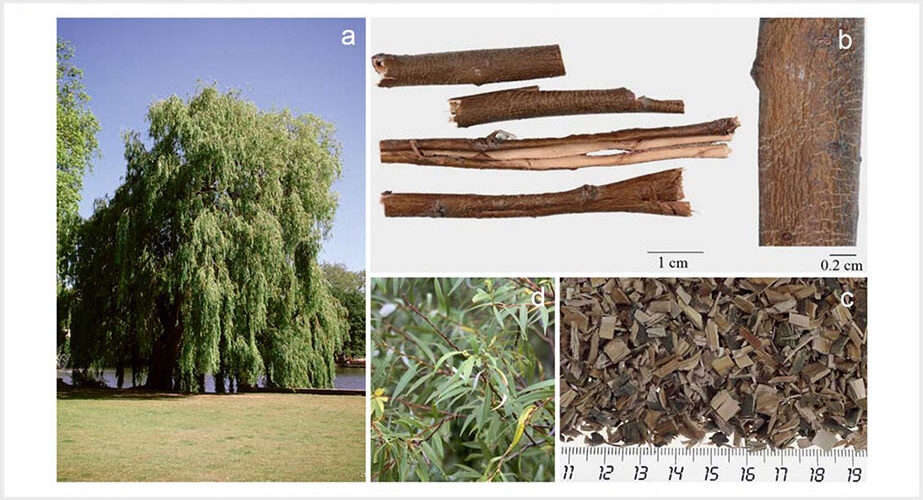
Fig. 1 Clockwise from upper left: A) Willow tree (© PLANTAPHILE); B) Dried branches of Salix alba from which willow bark is harvested and a close-up of the bark (USP, Dietary Supplements Compendium (DSC) 2019, Supplementary Information, Illustrations, Salix Species Bark); C) Chopped willow bark(© PLANTAPHILE); D) Willow leaves (© PLANTAPHILE).
Picking out pregnancy-safe skincare can seem complicated. I have an entire page on pregnancy beauty, dedicated to which skincare ingredients to avoid during pregnancy, breastfeeding, or IVF.
Today is about the safety profile of willow bark extract in pregnancy or nursing.
Here is a straightforward answer to the question, ‘Is willow bark safe during pregnancy or nursing?’:
Willow bark in topical products like skin creams, cleansers, etc., is safe for pregnancy and nursing.
It is not safe to use in oral formulations.
If you want to know the hows and whys of the safety profile of willow bark in pregnancy and nursing, read on.
Quick Navigation
What is willow bark?
The Willow family comprises 460 species of trees and shrubs. Some of the more commonly known are white willow (Salix alba), black willow (Salix nigra), crack willow (Salix fragilis), purple willow (Salix purpurea), and weeping willow (Salix babylonica). If you’re wondering, ‘Is willow bark safe during pregnancy?’ understanding the safety profile of these species is crucial.
The bark from these trees is used for their therapeutic benefits. Extracts of it are used in oral as well as topical forms. The amount of the actives that can be extracted depends on the variant of Willow.
The ancient Sumerians and Egyptians used it in oral form as a traditional medicine 4000 years ago. The therapeutic benefits of willow were recognized by the Ancient Chinese, Romans, and Native Americans. It was used (and still is) for managing fever, flu, joint pains, headache, menstrual cramps, etc.
Topically, it is used in the management of acne and psoriasis.
The active ingredient in willow bark is salicin, a type of salicylate.
Can I take willow bark orally when pregnant or breastfeeding?
If you have been curious about the safety profile of willow bark extract in pregnancy or nursing, you have landed on the right page.
When ingested, salicin in willow bark is converted to salicylic acid in the intestines.
From this point onwards, the metabolism, safety, and side effects profile are similar to salicylic acid.
Salicylic acid is not to be used while pregnant or lactating unless given for specific conditions, in a specific dosage, and strictly under medical supervision.
Medically unsupervised use of oral salicylic acid (also known as Aspirin) in pregnancy can lead to congenital birth defects.
Thus, willow bark, which forms salicylic acid in the intestines, should not be consumed during pregnancy.
Like oral salicylic acid (aspirin), the salicin in willow bark has been shown to cross the placenta and be excreted in breast milk. Giving infants oral salicylic acid (aspirin) to treat fever in viral infections has been associated with Reye’s syndrome, which causes liver and brain dysfunction.
The risk of Reye’s syndrome from salicylates in breast milk is unknown.
However, due to a theoretical risk, ingestion of salicylates (including aspirin and willow bark) is best avoided during breastfeeding.
Safer drugs are available for pain and fever.
Can I use willow bark topically when pregnant or breastfeeding?
The salicylate in the willow bark cannot be converted to salicylic acid on the skin’s surface.
(Salicylic acid topically up to 2% is considered safe to use in both pregnancy and lactation. Click here to know more.)
There are no studies regarding the safety of willow bark when used topically during pregnancy or lactation.
But, generally speaking, willow bark, as present in skin products, is considered safe to use while pregnant or lactating.
However, when lactating, ensure your baby does not come in contact with it as it can irritate his/her sensitive skin, and we would want to avoid any accidental ingestion by the baby.
Caution with willow bark
- If you are allergic to aspirin (oral preparation of salicylic acid) or topical salicylic acid as found in many antiacne medications, avoid oral or topical willow bark as well. These belong to the same family, and allergic reactions have been reported.
- If you have G6PD deficiency (a hereditary disease, also known as favism), avoid willow bark, as with aspirin use, hemolysis has been reported with willow bark supplements.
- If you are on any anti-coagulant or anti-platelet agent like aspirin or clopidogrel, consult with your doctor before you start oral willow bark supplements, which have an anti-platelet activity of their own, albeit weak.
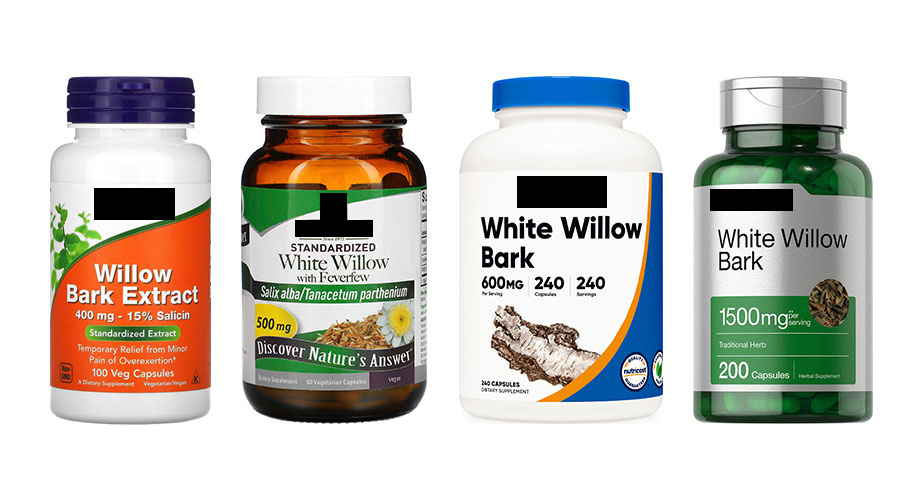
- Oral willow bark is sold without a prescription as a dietary supplement.
Dietary supplements need not be approved by the US FDA, nor does the manufacturer need to provide evidence of safety, as long as the supplement claims to contain ingredients that are established for use in that fashion. However, it has been shown that you may not get what is on the label or get something else. I would advise caution in the use of any dietary supplement- Nutritional Supplements or a Sucker’s Delight?
To directly quote the United States Pharmacopeia Safety Review of Willow Bark:
“Dietary supplements containing willow bark deliver up to 240mg of salicin, which can be metabolized into 113mg salicylic acid. However, when sold, these products are not required to bear any label warning. In contrast, over-the-counter (OTC) low-dose aspirin (81mg strength) delivering 62mg of salicylic acid is required to include guidelines on the use in pregnant women and children, as well as contraindications pertaining to blood coagulation. In the interest of protecting public health, the USP Dietary Supplements Admission Evaluations Joint Standard Setting Subcommittee directed that a cautionary labeling statement be included in the USP Salix Species monograph that reads as follows: “Dosage forms prepared with this article should bear the following statement: ‘Not for use in children, women who are pregnant or nursing, or by persons with known sensitivity to aspirin’”
To read the full safety review, click here.
Topical Willow vs. Salicylic Acid. Which is better?
Both are used for acne and are effective as an exfoliator.
Both are safe to use in pregnancy and lactation.
Note: Is Topical Salicylic Acid Safe in Pregnancy & Lactation?
Topical salicylic acid up to 2% concentration is safe for pregnancy and breastfeeding.
An effective exfoliant, salicylic acid can, however, cause redness, irritation, and skin flaking even at low concentrations. Salicin in willow bark is said to be a much gentler version with a better tolerance profile.
As for which one has more beneficial effects when used at the same strength, we do not know yet.
Willow bark is also said to have additional benefits due to the presence of antioxidants and anti-inflammatory chemicals in it, like tannins, phenolic acids, and flavonoids. The touted benefits of these are:
- Calms redness,
- Astringent action refining skin pores,
- Reduction of oiliness,
- Reduction in signs of skin aging.
A study compared a mixture of willow bark extract + hops to a standard face cleanser in 21 adults and found the mixture to be not only an effective degreasing agent but also, unlike the standard cleanser, did not show a reactive increase in the sebum once it was discontinued.
Another study evaluated a serum containing 0.5% salicin for visible signs of aging in 29 female adults and found statistically significant improvements in “wrinkles, tactile roughness, pore size, radiance, and overall appearance at week 1 against baseline and in mottled pigmentation, global firmness, and jaw-line contour at week 4 against the baseline.”
However, there are still not enough studies to conclusively state that willow bark is superior to salicylic acid.
They both are effective ingredients in their own right, and the choice largely depends on personal preference.
Trivia
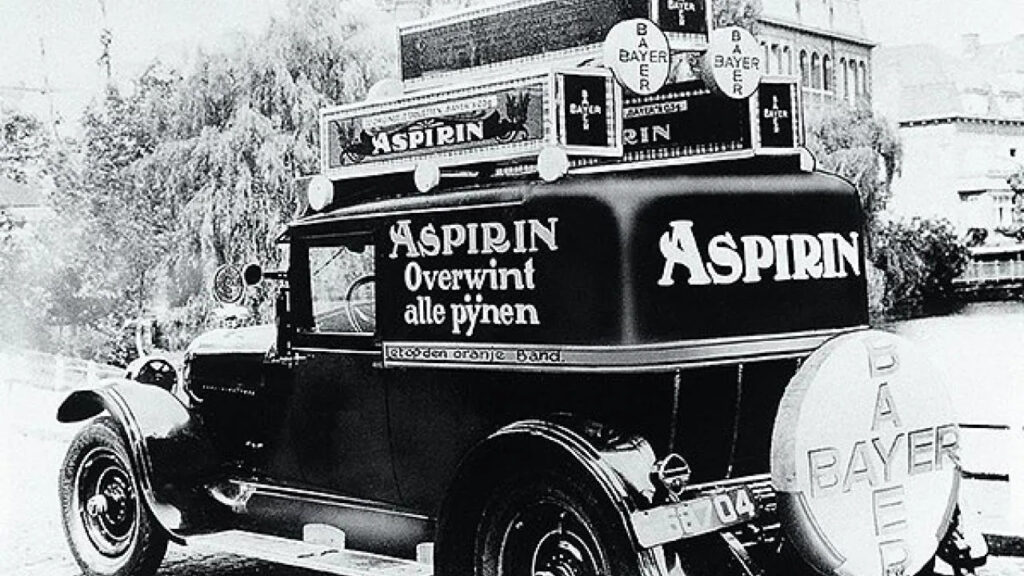
Aspirin (chemical name: acetylsalicylic acid) is the most commonly used and recognized salicylate. It is trademarked by the pharmaceutical giant Bayer, which started as a dye manufacturing factory in Germany. After successfully extracting an anti-fever medicine from waste products in the dye manufacturing process, they started a pharmaceutical division in 1890. The acetylsalicylic acid they produced in 1897 is now universally recognizable as Aspirin, with an estimated 40,000 tons (50 to 120 billion pills) consumed each year across the world!