
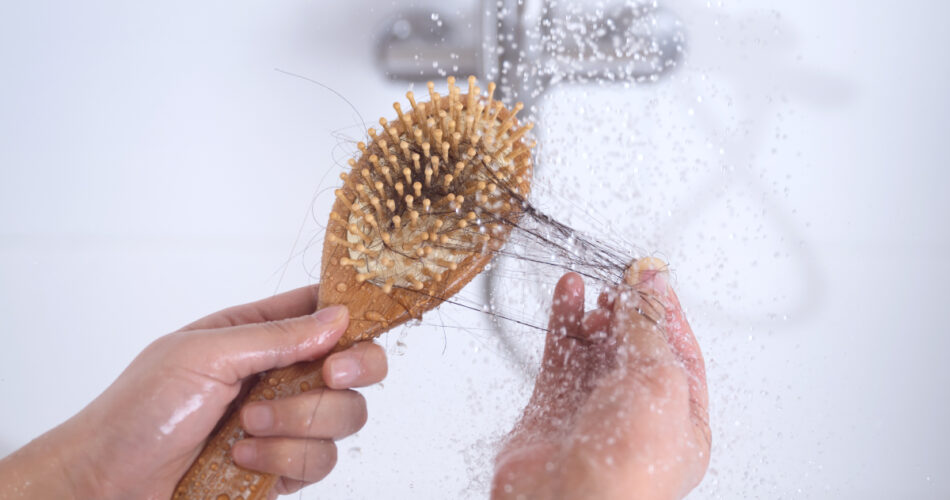
If you are noticing more shedding after your baby arrived, you are not alone, and it is almost always temporary.
If you are reading this postpartum, you are probably noticing more shedding and thinning of your hair. This can hit hard, especially after a stretch in pregnancy when you had thick, lustrous hair and no shedding concerns at all.
Fret not. Hair loss after pregnancy is a normal and expected course of events, driven by the natural fluctuations in your hormone levels. This guide from Clean Conscious Beauty walks through when it starts, why it happens, how long it lasts, and what you can actually do about it.
Quick Navigation
The Basics
What is postpartum hair loss?
Postpartum hair loss or thinning is a common condition that typically begins around 2 to 3 months postpartum and can last for up to 12 months.
Studies have documented that over 90% of women experience hair loss after pregnancy. It can be a distressing and stressful experience for many moms, with research showing a direct correlation between postpartum hair loss and postpartum anxiety, but fortunately, it is largely a temporary condition.
Keep in mind that the shedding can seem monumental after months of minimal hair fall and lustrous hair during pregnancy. If you have long hair, the amount lost can also look far more dramatic than it actually is.
It can also happen to varied groups of people. Hair loss after pregnancy is a form of telogen effluvium, a condition characterised by diffuse, often acute hair loss triggered by physiological or psychological stress, hormonal changes, illness, medications, and nutritional deficiencies. This means it can affect not only women who are postpartum but also women who have had a miscarriage or stillbirth.
The Science
Why does postpartum hair loss happen?
Scalp hair grows in four cycles, and understanding them makes the postpartum shed much less mysterious:
Anagen (growth)
85 to 90% of hair sits here. Increased estrogen during pregnancy keeps hair in this stage longer, giving you that full, thick head of hair.
Catagen (regression)
1 to 3% of hair is here. Hair growth stops and the follicle shrinks.
Telogen (resting)
5 to 15% of hair is here. As estrogen drops in the postpartum period, a much larger number of hairs than usual shift into this phase, leading to loss and thinning.
Exogen (shedding)
Hair in the telogen phase is shed, roughly 50 to 150 strands per day.
All your hairs do not move through these stages at the same time. Hair growth is asynchronous, meaning each strand follows its own cycle, which is exactly why you never lose all your hair at once.
As you can see, a fall in estrogen levels during the postpartum period triggers the shed, and you might even notice more hair on your shower floor than on your head.
Timeline
How long does it last?
Hair loss typically starts 2 to 3 months after delivery, peaks at about 4 to 5 months, and in most cases stops by the time your child is a year old.
Reassurance
Does the hair grow back?
Yes. The hair always grows back. Hair loss after pregnancy is not permanent, and as your hormone levels taper off, the loss reduces and new hair grows in.
During the regrowth phase, the new hair might seem thinner at first, but it generally returns to your pre-pregnancy thickness.
At Home
How to manage it at home?
Irrespective of what targeted ads may tell you, there is no treatment for postpartum hair loss. You can, however, tweak a few things to make your hair look fuller and prevent further loss and damage:
Choose volumizing products. Pick a shampoo and conditioner that adds volume. This may take some experimentation, but products for fine hair and those meant for added volume generally work best.
Wash your hair regularly. A scalp full of buildup, oil, dirt, and product is not an optimal environment for growth. Regular washing removes greasy buildup, boosts volume, and makes hair easier to manage and style.
Take it easy on your hair. No tugging or rubbing the scalp harshly while washing and combing. Avoid tight ponytails and braids, and use soft scrunchies rather than rubber bands.
Consider a new hairstyle. Shorter hair gives a fuller appearance, is easier to manage with a baby around, and makes the shed look less dramatic as length reduces.
Accessorize. Bring on the scarves and headbands and have fun experimenting with your look.
Try gentle hair massages. Use natural oils to boost blood circulation to your scalp and hair follicles.
Avoid harsh treatments. Skip straightening and highlights, and cool off on heat tools like curling irons and straighteners.
Avoid herbal supplements. These have no proven benefit and come from an unregulated industry that can do more harm than good (see Nutritional supplements or a sucker’s delight?). If you must take any supplement, speak to your physician first.
Eat a healthy, balanced diet. Make sure your body, and your hair, is getting all the right nutrients.
Red Flags
When to seek professional help?
Postpartum shedding is usually nothing to worry about, but reach out to a professional in any of these situations:
Excess anxiety. If the hair loss is causing you significant distress and seeing a professional would reassure you and improve your quality of life, absolutely go for it.
Loss beyond 12 months. Shedding should stop by the time your child turns one. If it does not, there could be an underlying cause such as a thyroid disorder or nutritional deficiency.
Bald spots. You start seeing distinct bald patches on your scalp rather than generalised thinning.
Scalp issues. Any accompanying problem such as itching, redness, or sores.
Other symptoms. Extreme fatigue or weight changes could signal an underlying health concern.
Prevention
How to prevent postpartum hair loss?
Unfortunately, there is no way to prevent it. This is a natural phenomenon caused by tapering hormones after childbirth, and it will run its course. That said, being aware of the condition and knowing how to care for your hair through it genuinely helps.
A Personal Note
What I did?
I simply made sure I washed my hair regularly and kept it in a loose ponytail. That was all. It ran its course, exactly as expected, and by the time my child was a year old it had settled down. And yes, I have my original hair volume back.
By then I was also off any postnatal supplements, and I never indulged in the special hair supplements or miracle products that are flooding the market, and probably your social media feed too.
Treatments
Does Rogaine or Minoxidil help?
By increasing blood flow to the hair follicles and helping them enter the growth phase faster, Minoxidil (Rogaine) can stimulate hair growth. However, it is generally not recommended for temporary postpartum hair loss, especially while breastfeeding, for the following reasons:
Although not entirely contraindicated while nursing, caution is advised, as it is excreted into breast milk and side effects in the breastfeeding child have been reported. For more, see Can You Use Rogaine or Minoxidil While Breastfeeding?
Minoxidil is not meant for short-term use; it is a long-term treatment. Once you stop, the hair reverses to its original state. Postpartum hair loss, by contrast, is short-term and self-limiting and will normalise on its own.
Topical minoxidil takes a minimum of 2 to 4 months of consistent use to show results. By that time, you may already be on your way to natural recovery.
It also causes initial shedding when you start, so you may suddenly notice more hair falling out. If you still want to try it, do not start without consulting your doctor first.
In Short
Takeaway
Postpartum hair loss is a normal phenomenon that begins around 2 to 3 months postpartum and stops by the time your child is a year old.
There is no treatment for it. General measures like being gentle with your hair, washing regularly, and choosing volumizing products are what help.
Seek professional help if loss continues past one year, you develop bald spots, or you have other symptoms such as scalp inflammation, extreme fatigue, or weight changes, as these may point to an underlying health concern.
Trivia
A little hair history
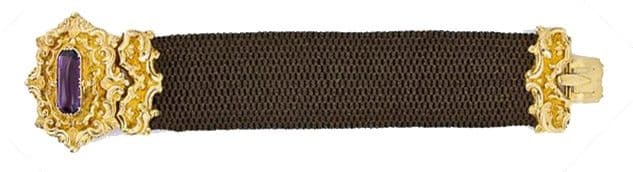
Jewelry and mementos made of hair were a popular, sentimental custom in Victorian England, especially in relation to mourning. The hair of the deceased was woven into lockets, rings, and braided jewelry as an intimate keepsake. One example is the Georgian Mourning Bracelet with Amethyst, around 1828, documented in this history of hair jewelry.
If you take one thing from this: the shed is temporary, your hair will come back, and the kindest thing you can do is be gentle with it, and with yourself, while it runs its course.