
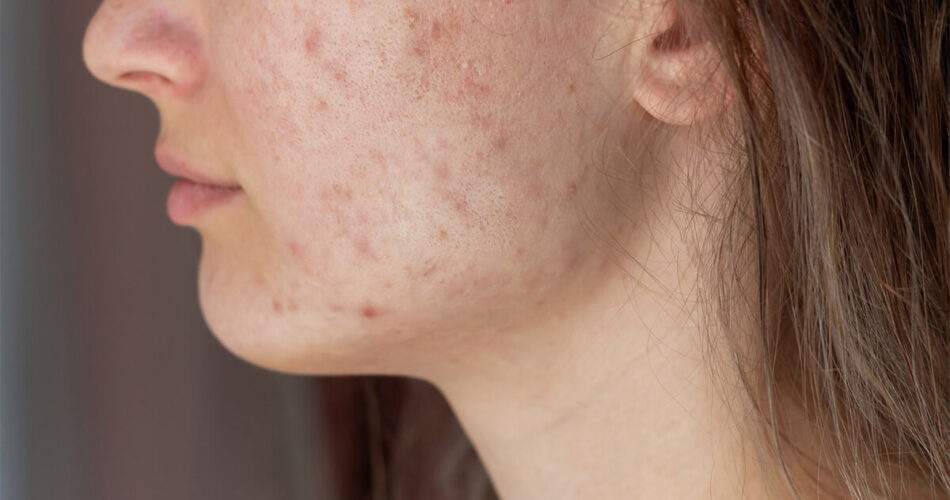
The other day I had a 19-year-old patient with nodulocystic acne all over her face. She had an internship where client interface was required and, thus, sought help. She had acne for the past year and was told by well-wishers to ignore it as ‘It will go away.’ I see this common theme regularly- let it run its course instead of treating it.
I am not going to dispute the well-wishers. No one will give ill-meaning advice deliberately, and theoretically speaking, they are right- it will go away. But what about the consequences? I could already see deep scars where previous cysts had healed and hyperpigmentation due to inflammation. And what about self-esteem?
Just acne, on the whole, in the realm of bodily health, is harmless, but treating it early has many advantages. It is essential to acknowledge that acne affects more than just appearance.
Quick Navigation
- Here is why acne should always be treated early.
- Get faster results from treatment.
- Prevent mild cases from becoming severe.
- Decrease the likelihood of needing stronger (and often with more side effects) medications.
- Avoid pigmentation spots from developing.
- Keep acne scars at arm’s length.
- Sidestep years of acne.
- Give a wide berth to emotional distress.
- Takeaway.
- Trivia.
Here is why acne should always be treated early
1. Get faster results from treatment.
Acne treatment takes time. Expect at least 4 to 6 weeks for results to start showing. Severe acne can take months to resolve. In the case of scarring and hyperpigmentation, the treatment time further increases, more so since all the components of acne (acne, pigmentation, scars) may not always be treatable together.
2. Prevent mild cases from becoming severe.
Early treatment can stop the cascade of events that lead to a comedone (blackhead or whitehead) developing into pustular acne, which is associated with more complications and longer treatment times.
3. Decrease the likelihood of needing stronger (and often with more side effects) medications.
As acne becomes severe, you might need more potent, and often a combination of medicines for a longer duration. Such medicines need monitoring under the supervision of your doctor resulting in more frequent visits and might even involve bloodwork.
4. Avoid pigmentation spots from developing.
PIH (post-inflammatory hyperpigmentation) in the form of persistent redness in fair people or dark spots in brown-skinned where the acne was. This a common complication as the severity increases. The spots are hard to eliminate entirely, and many consider them to be worse than the acne itself, as it can be very persistent.
5. Keep acne scars at arm’s length.
Scarring is physically disfiguring and can be emotionally debilitating. It can have a profound effect on your life. Scarring develops when the acne gets inflamed and can happen even with mild acne, especially if one tends to pick. Treating at the first sign of acne may also prevent the habit of picking from developing.
Scar prevention is a goal of acne treatment, and the earlier you seek it, the more positive results you can expect. Furthermore, treatment for acne scarring is often expensive and time-consuming, and the result is not always satisfactory to the patient.
6. Sidestep years of acne.
Acne is now affecting kids as young as 7 years old. Treating acne early and keeping it under control will prevent future breakouts. Many people have acne in their 20s, 30s, and even 40s. Treating it in childhood can add to many years without acne.
7. Give a wide berth to emotional distress.
The social impact of acne, particularly in adolescence, especially in times of social media, cannot be understated.
Physical and emotional scars are equally important. With effective therapy available, there is no reason why one should allow acne to reach such a state that emotional distress and low self-esteem due to acne and facial scarring should rule your life.
One often thinks of skin diseases as trivial and unimportant in the scheme of life. However, as a study showed, reported levels of social, emotional, and psychological problems in acne patients were comparable to those suffering from asthma, epilepsy, diabetes, back pain, or arthritis.
Takeaway
- Treating acne early leads to quicker, better clinical outcomes and improved quality of life.
- Acne is not a trivial disease and can result in significant psycho-social limitations in the sufferer.
- Treatment of acne complications (pigmentation changes and scarring) is expensive, long-drawn, and not always 100% effective. Treating it early saves you from this ordeal.
- If you find yourself avoiding social situations due to acne, it is high time you seek treatment.
Trivia
Propionibacterium acnes, largely (in)famous for its prominent role in acne, is a part of the normal flora of the skin, eye conjunctiva, oral cavity, external ear canal, and the large intestine. This essentially harmless bacteria triggers nasty inflammation and zits when it is trapped inside the airless, oily conditions inside a hair follicle.

And yes, celebrities get acne too.