
What is clean beauty?
We all have heard about it.
Many of us adhere to it.
There are scores of companies that have built their brand on this premise.
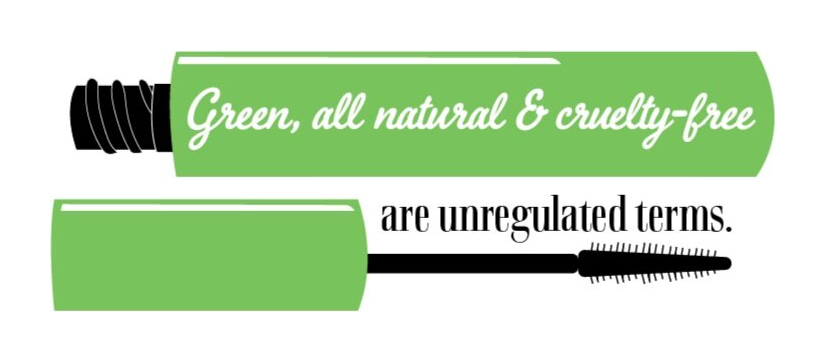
Yet, there is no legal, textbook, or universally even agreed-upon definition, and much of the information you will get comes from brands that sell ‘clean beauty’ products.
Quick Navigation
What is Clean Beauty?
Clean beauty is a movement towards using skincare and cosmetic products formulated with non-toxic ingredients and free of harmful chemicals.
It recognizes that our skincare and cosmetic products can be loaded with ingredients or chemicals that harm our physical well-being.
Source: nokillmag
To reiterate, there is no legal or textbook definition of clean beauty. There is no rule book!
Other pointers about what is clean beauty:
- It is not necessarily only plant-based.
- It is not necessarily only organic.
- It is not necessarily cruelty-free.
- It is not necessarily vegan or free of animal-derived ingredients (such as beeswax or honey).
- It is not necessarily sustainably sourced.
- It is not necessarily environmentally friendly.
- It is not necessarily fair trade sourced.
- It is not necessarily preservative-free.
To sum up, the absolute must-have, the sine qua non* of Clean Beauty is a formulation that is safe and non-toxic for human use.
Anything additional, like cruelty-free, organic, sustainable, etc., is a specific attribute of the brand and reflects how far they are willing to commit to beyond the baseline of non-toxicity.
Clean Beauty is not a static movement. As we learn more about the chemicals (both natural and lab-made) used in our skincare, safety and efficacy standards will evolve.
(*Latin, literally meaning ‘without which, not’ or simply stated ‘something that is essential’. This is a term you will commonly encounter in medical textbooks and a key element in defining many disease conditions.)
What to know before you buy ‘Clean Beauty’ products?
- Be informed. As a skincare enthusiast, it is worth noting that the beauty industry is self-regulated and pretty much polices itself. Any brand can call itself clean beauty and sell clean beauty products with no set standards to follow or meet.
- Clean beauty is not black-and-white. Different companies have their own definitions of which ingredients or chemicals are toxic. Yes, there are a few chemicals universally considered toxic, but other than that, companies are free to include or exclude chemicals from their formulations because, as stated previously, there is no legal definition or standard to adhere to.
- More banned is not better. Just because a company has more ingredients that they have ‘banned’ from their formulations, it does not make them better than the one that has fewer banned chemicals in their catalogue.
- Beware of ‘Greenwashing.’
What is Greenwashing or Green Sheen?
The practice of greenwashing has become so problematic that even the United Nations has chimed in.
This is what it has to say about Greenwashing in a few crisp, straightforward sentences:
‘By misleading the public to believe that a company or other entity is doing more to protect the environment than it is, greenwashing promotes false solutions to the climate crisis that distract from and delay concrete and credible action.’
Greenwashing in the beauty industry can often look like this:
- Bondi Sands labeled their sunscreen as reef-friendly. While it was free of certain chemical sunscreens that damage the reef, the other ingredients in it were not ‘reef-friendly’. (Again, like ‘clean beauty,’ there is no legal or textbook definition of ‘reef-friendly.’)
- Head & Shoulders claimed their Ocean Clean shampoo bottles are recyclable. However, the bottle caps were not.
- Lily Lashes claimed their mink lashes were cruelty-free. Guess what? They were not.
Corporations are profit-making entities. We, the consumers, can demand changes in the beauty industry by making purchase decisions based on factors such as learning what actually constitutes ethical practices, conducting research on the company, reading the fine print, and seeking trustworthy third-party certifications.
Be wary of preservative-free products
With all the lashing preservatives get, the idea of a preservative-free product sounds liberating. Not to forget very ‘clean’ and in with the ‘clean beauty’ trajectory.
They might not be everyone’s darling, but preservatives perform an important function- they inhibit the growth of harmful bacteria and fungi, keeping your beauty product safe to use.
Remember, every time you dip your finger into your jar of cream, or every time you swipe mascara over your lashes and put it back, you are introducing microorganisms.
The only way a product can be formulated without any preservatives is if it has 0% water and is 100% oil.
These typically are products like body oils and balms.
Products like cleansers, serums, and lotions will need a water base and thus cannot be preservative-free.
For more information:
What to look for in preservative-free skincare products?
My approach to clean beauty.
For me, clean beauty is an intentional extension of living a clean life. I also recognize that while I cannot completely eliminate exposure, making practical and informed reductions in exposure to harmful chemicals translates into progress toward long-term wellness.
There have been times when I have used products that are not clean, but they fit my requirements, my budget, and my limited time.
Real talk: I’m currently using PanOxyl for my back acne because it works and it’s convenient. It’s not ‘clean,’ but I make it work safely. I mask up (N95 style!), use the bathroom vent for airflow, and keep the spray contained in the toilet’s closed space to protect my family’s air quality. This is what I mean by being practical—reducing exposure where we can, without stressing over the things we can’t eliminate entirely.
And of course, there are things that I cannot control like parabens in my medicines (as a preservative in both oral and topical medications), pthalates in the IV tubings that I was hooked on multiple times during my IVF treatment and delivery, or simple everyday things you do not think about like vinyl floorings in the house (phthaltes, PVC, heavy metals, VOCs etc).
Approach clean beauty as an informed choice and not as a byproduct of social media influence or industry marketing.
My perspective is simple: focus on minimizing exposure where possible, rather than striving for an impossible standard of elimination.
It is doable, realistic, and impactful.
Takeaway
- Clean beauty refers to skincare and cosmetic products that use non-toxic ingredients and ditch harmful chemicals.
- There is no legal or textbook definition of clean beauty.
- Companies have free rein to call themselves ‘clean’ with no rulebook to follow.
- Greenwashing in the beauty industry is common, and consumers should watch out for it.
And last but not least, a clean, simple truth: