
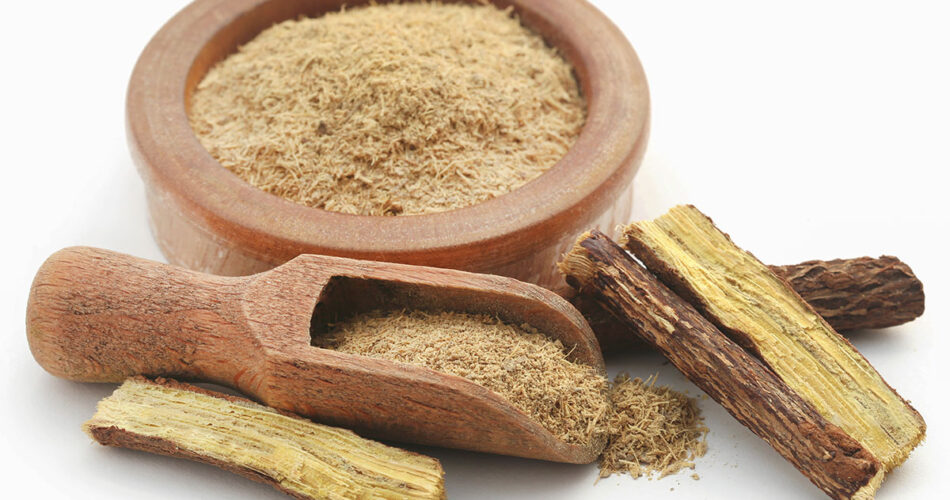
Oral licorice is contraindicated in pregnancy, but licorice in skincare is generally considered safe: here is what the evidence shows.
Navigating pregnancy-safe skincare can be complicated, but as a medical doctor with a focus on cosmetic ingredient safety, I’ve simplified the search for you. Visit my Skincare During Pregnancy: Begin Here guide for a full index of ingredient safety reviews, pregnancy and IVF-safe recommendations, and doctor-vetted product guides.
Today is about licorice and pregnancy.
There is a general consensus that oral licorice is contraindicated in pregnancy.
As for use as a topical agent in skin care products, it sees acceptance or disapproval depending on which resource you refer to.
Previous blog posts have dealt with similar contentious topics like:
Is willow bark in skincare products pregnancy & lactation safe?
A: Yes, it is.
Is topical salicylic acid safe in pregnancy & lactation?
A: Yes, but with certain caveats.
Is bakuchiol (plant-based retinol alternative) pregnancy & lactation safe?
A: No, it is not.
Quick Navigation
The Basics
What is licorice?
Licorice is the root of the plant Glycyrrhiza glabra. It is commonly used in traditional systems of medicine as a remedy for ailments like acidity, cough, viral infections, etc. However, if you’re wondering, ‘Is licorice root safe for pregnancy?’ or ‘Is licorice root safe for breastfeeding?’ it’s essential to consider its safety profile during these periods.
The Sanskrit name is ‘Yashti-madhu,’ which literally means ‘sweet root’ and is used as a natural sweetener in edibles like candy, chewing gum, soft drinks, alcoholic beverages, etc.
Where It Is Found
In what type of products is it found?
It is found as a:
- Food sweetener.
- Health supplement.
- In skincare.
The label might read:
- Licorice
- Licorice root
- Glycyrrhiza
- Glycyrrhizin
- Glycyrrhizinate dipotassium
- Glycyrrhetinic acid
- Glabridin
- Sweetroot etc.
Licorice is used as a natural food sweetener in candies, alcohol and nonalcoholic beverages, teas, ice creams, chewing gum, cookies, etc.

It is also commonly sold in supermarkets as a health or herbal supplement for acidity, cough, viral infections, hot flushes, etc.
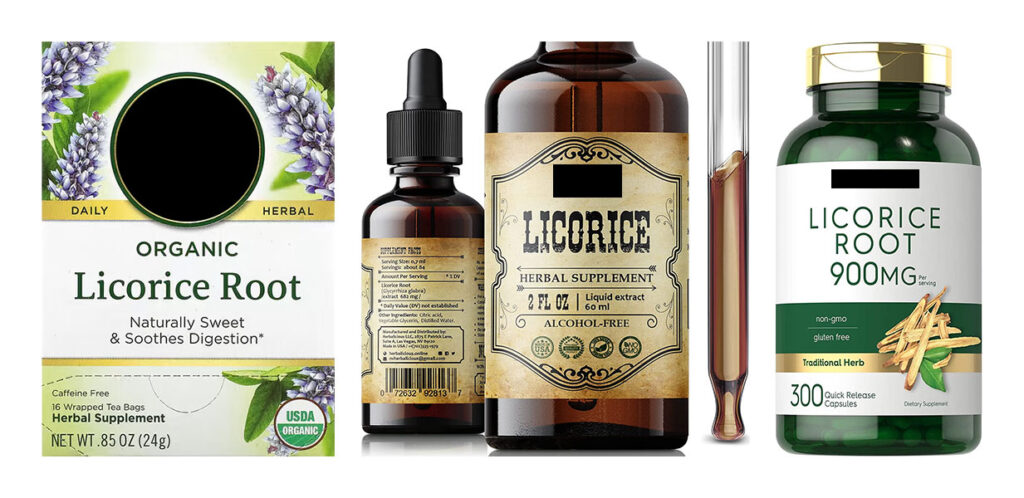
It requires no prescription, is USFDA approved and derives its popularity from a belief that being natural, it is harmless and can be consumed liberally.
However, not everything natural is good for you, and the supplement market is not just unregulated, but you might not actually need them in the first place: Nutritional Supplements or a Sucker’s Delight?
If you are a consumer, be aware that the excess or chronic use of oral licorice has been linked to hypertension and electrolyte disturbances, and begets caution if you are over 40 with a history of heart disease, hypertension, or both.
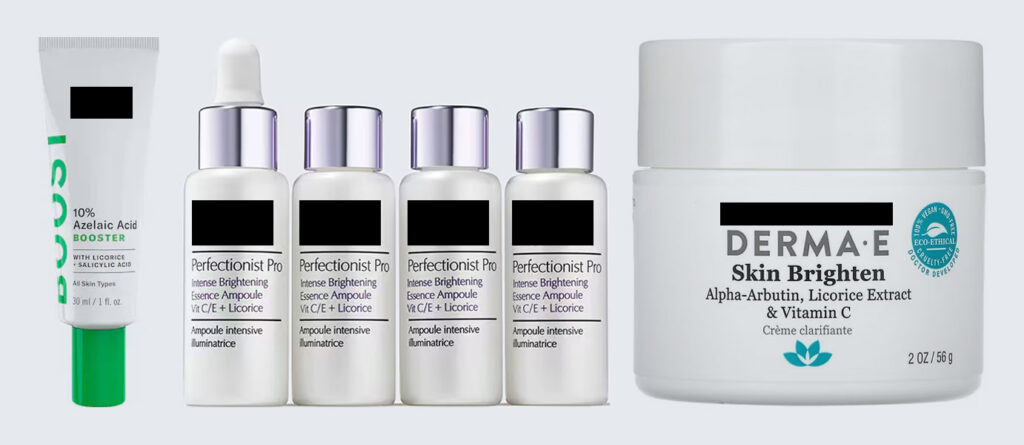
In skincare, it is used as an antioxidant, skin brightener, and to fade hyperpigmentation marks. Due to its beneficial property, it is often combined with other skin actives like vitamin C, azelaic acid, and niacinamide: all of which are safe to use in pregnancy.
The Evidence
The problem with licorice consumption in pregnancy
Oral licorice is contraindicated in pregnancy.
Issues arising from its consumption when pregnant have been well documented. Studies have shown that children exposed to it in-utero had multiple issues:
Early puberty in girls that has been linked with depression, hormone-sensitive cancers, adult obesity, and cardiometabolic disorders.
A possible mechanism of these dysfunctions could be that the glycyrrhizin in licorice potentiates the effects of the stress hormone cortisol as it inhibits the enzyme that inactivates cortisol. While cortisol is essential to the development of a fetus, in large amounts, it is damaging.
It is important to note that, as yet, there is no defined safe exposure limit in human pregnancy, as the deleterious effects have been shown to show a linear correlation (i.e., two factors change together at a constant rate; e.g., the more salt you put in your food, the saltier it gets).
However, in small amounts, it is believed to be safe.
Breastfeeding
Is licorice consumption safe while breastfeeding?
Licorice is a herbal medicine in certain traditional medicine systems and is touted to increase maternal milk production.
This still needs to be verified by scientific clinical trials.
As a matter of fact, chronic consumption of licorice has been shown to reduce prolactin levels which can reduce milk secretion.
Chronic excess use of licorice has been shown to increase blood pressure, disturb the electrolyte balance of the body, and cause abnormalities in sex hormones in the body of the consumer.
Due to the above reasons, the National Institutes of Health considers that oral licorice should probably be avoided while breastfeeding.
In Skincare, Pregnancy
Is licorice in skincare pregnancy safe?
While oral licorice is unquestionably unsafe for use while pregnant, its use in skincare products is looked upon differently.
Licorice root extract (Glycyrrhiza alba) in topical skincare products is a low concern and is generally considered safe to use.
It is, however, not definitively ‘proven safe for pregnancy’, which is the case for most of the chemicals found in skincare products.
We do not have any definitive data on topical licorice, as there are no actual experiments in pregnant women for obvious reasons. The data we have on oral licorice stem from its traditional and common use as a popular snack in some countries, such as Italy, Spain, and Scandinavia, leading to inadvertent exposure during pregnancy.
Why do I say it is potentially safe?
1) The amount found in skin care products is low: we cannot compare the amount in a cleanser or serum with the amount being ingested as a snack.
2) As this study demonstrates: Skin changes and safety profile of topical products during pregnancy, the amount of systemic exposure from most topical products is typically low, although we are very limited in ingredient-specific data.
For the two reasons above, licorice in skincare should be safe to use during pregnancy.
However, if you are concerned, you can skip it and instead try other pregnancy-safe options like vitamin C and azelaic acid that manage the same concerns that licorice root does.
The label on the product bottle might read:
- Licorice
- Licorice root
- Glycyrrhiza
- Glycyrrhiza glabra
- Glycyrrhizin
- Glycyrrhizinate dipotassium
- Glycyrrhetinic acid
- Glabridin
- Sweetroot, etc.
In Skincare, Breastfeeding
Is licorice in skincare safe for breastfeeding?
As with licorice use while pregnant, we have no data about its use while breastfeeding.
We do not know how much of it gets excreted in breast milk, but generally speaking, very little of a product, if any, applied on the skin reaches the breast milk.
It is generally considered safe to use skincare products containing licorice while breastfeeding.
However, make sure your baby does not accidentally ingest the product.
Do not use it if you have doubts and are uncertain.
If you have concerns, there are other options in place of licorice for the management of hyperpigmentation while pregnant:
Pregnancy Safe Melasma & Hyperpigmentation Treatment.
Top 10 Pregnancy & Lactation Safe Sunscreens For Melasma & Hyperpigmentation.
Takeaway
Takeaway
Licorice is commonly used as a natural sweetener, a herbal supplement, and in skin care for hyperpigmentation.
Consumption of licorice during pregnancy has been associated with early delivery, cognitive and behavioral issues, and early puberty onset in girls.
The NIH does not recommend consumption during breastfeeding.
Although the data are limited, using it during pregnancy and breastfeeding is largely considered safe.
FAQ
Common questions about licorice in pregnancy
Is licorice root safe during pregnancy?
Oral licorice is contraindicated in pregnancy. Studies have shown that children exposed to it in-utero had earlier delivery, lower scores on intelligence and memory tests, behavioral problems including poor attention, aggression and rule-breaking, and early puberty in girls. There is as yet no defined safe exposure limit in human pregnancy, since the deleterious effects show a linear correlation, though in small amounts it is believed to be safe.
Why is licorice a problem in pregnancy?
A possible mechanism is that the glycyrrhizin in licorice potentiates the effects of the stress hormone cortisol, as it inhibits the enzyme that inactivates cortisol. While cortisol is essential to the development of a fetus, in large amounts it is damaging.
Can I eat licorice while breastfeeding?
The National Institutes of Health considers that oral licorice should probably be avoided while nursing. Although licorice is touted in some traditional medicine systems to increase maternal milk production, this still needs verification by clinical trials, and chronic consumption has actually been shown to reduce prolactin levels, which can reduce milk secretion. Chronic excess use also increases blood pressure and disturbs electrolyte balance and sex hormones.
Is licorice in skincare safe during pregnancy?
Licorice root extract in topical skincare products is a low concern and is generally considered safe to use, although it is not definitively proven safe for pregnancy, which is the case for most of the chemicals found in skincare products. The amount found in skincare products is low, and the systemic exposure from most topical products is typically low. If you are concerned, you can skip it and instead try other pregnancy-safe options like vitamin C and azelaic acid that manage the same concerns that licorice root does.
Is licorice in skincare safe while breastfeeding?
It is generally considered safe to use skincare products containing licorice while breastfeeding. Very little of a product applied on the skin, if any, reaches the breast milk. Make sure your baby does not accidentally ingest the product, and do not use it if you have doubts and are uncertain.
What names does licorice go by on an ingredient label?
The label might read licorice, licorice root, Glycyrrhiza, Glycyrrhiza glabra, glycyrrhizin, glycyrrhizinate dipotassium, glycyrrhetinic acid, glabridin, or sweetroot.
Spotted licorice on a label?
If you would like a quick, doctor-vetted look at whether an ingredient fits your pregnancy or nursing stage, I would love to help.