(Navigating pregnancy-safe skincare can be complicated, but as a medical doctor with a focus on cosmetic ingredient safety, I’ve simplified the search for you. Visit my Skincare During Pregnancy – Begin Here guide for a full index of ingredient safety reviews, pregnancy and IVF-safe recommendations, and doctor-vetted product guides. )
It is difficult to say what percentage of a said chemical is being absorbed from the skin into the bloodstream and reaching the baby. There are so many variables for, e.g., specific site and the area size being applied to, the chemical concentration, skin condition, the vehicle used in the product, the pH of the product, the duration of contact, etc.
Because ethical considerations abound, we will never have complete data on pregnancy-safe skincare ingredients in the human population. No one would experiment on pregnant women, and no pregnant woman would volunteer to be a test subject. The few studies that we do have are observations involving no interventions and studies on animals.
Always consult with your treating doctor, and ALWAYS do your research before you deem any product safe.
This is not an exhaustive list. Do not rely on just this list to exclude or include products.
This list talks only about products for topical application.
Many of the chemicals on this list negatively impact your fertility, and it is essential to weed them out of your personal care products. In this list, chemical sunscreen is the one to watch out for. Part II of this series has a long list of similar fertility-impacting chemicals. Click here to read it.
I also have a post about skincare ingredients to avoid when you are on IVF treatment:
IVF Success Tips: Avoiding Harmful Skincare Chemicals to Enhance Fertility.
Part II of the post deals with parabens, phthalates, added fragrances, retinoids, triclosan, formaldehyde, methylene glycol, and formaldehyde releases. Click here to read this post.
Quick Navigation
AHAs In High Percentage
Alpha Hydroxy Acids are a group of naturally occurring acids used as an exfoliant and a depigmenting agent.
These are found in cleansers, toners, wipes, creams, masks, serums, medical peels, and other products.
Depending on the source, there are several types of AHAs, e.g., citric from citrus fruits, glycolic from sugarcane, lactic from dairy, malic from apples, and tartaric from grapes.
Glycolic and lactic acids are the most commonly used in skincare, but they all have a similar mechanism of action.
The absorption of AHAs depends on the pH of the solution and the vehicle used. For example, an acidic pH of less than 3 enhances absorption, and the use of glycerin as a vehicle reduces absorption through the skin.
There are animal studies demonstrating fetal abnormalities when glycolic acid was administered in high doses (600mg/kg/day).
Similar studies on the human population are missing. Still, topical glycolic acids available as over-the-counter cosmetic products are generally thought to be safe due to their much lower concentration than what has been used in animal studies.
AHAs at a concentration of <10% with a pH of >3.5 are generally considered safe.
American College of Obstetrics and Gynecology (ACOG) considers over-the-counter glycolic acid as pregnancy-safe.
Abstain from peels as these have acids at higher concentrations and often in an acidic formula to enhance their penetration.
The label will read:
AHA or lactic acid, glycolic acid, malic acid, tartaric acid. Anything below 10% is safe, preferably at a pH above 3.5.
A note on AHAs: Your skin can get sunburned while taking AHAs, so sun protection is a must. People with pigmented skin should be careful, as a lack of sun protection can lead to more stubborn marks and pigmentation than you started with and sought treatment for.
BHA / Salicylic Acid >2%
I have covered salicylic acid extensively in two previous posts.
i) Is topical salicylic acid for acne safe in pregnancy and lactation?
Click
ii) Pregnancy (and all stages safe) salicylic acid cleansers.
Click
To sum up, BHA or salicylic acid is safe in concentrations of 2% or less. In the USA, due to FDA regulations, the concentration of salicylic acid in over-the-counter skincare products is never more than 2% (Source: USFDA- Over-the-Counter (OTC) Monograph M006: Topical Acne Drug Products for Over-the-Counter Human Use)
Chemical Sunscreens
There are two types of sunscreen: chemical and physical. The former absorbs the sun’s rays, and the latter deflects them from the skin.
There are only two physical sunscreens- Zinc oxide and Titanium dioxide.
The FDA, in its September 2021 report on sunscreen regulation, states that only these two sunscreen ingredients (Zinc oxide and Titanium dioxide) are generally recognized as safe and effective (GRASE).
Click here to see the FDA report.
It also listed the chemical sunscreens PABA and trolamine salicylate as not being GRASE due to safety concerns.
Not GRASE status was also given for the chemical sunscreens cinoxate, dioxybenzone, ensulizole, homosalate, meradimate, octinoxate, octisalate, octocrylene, padimate O, sulisobenzone, oxybenzone (also known as benzophenone 3), and avobenzone, but the report clarified that additional data are still needed for these sunscreens.
(Note: The GRASE and not GRASE status has been conferred irrespective of the state of pregnancy or lactation)
Chemical sunscreens are endocrine disruptors– chemicals that interfere with the normal functioning of the body’s endocrine system.
Of these, oxybenzone (also known as benzophenone 3) has been extensively studied and has shown, after topical application, to penetrate the bloodstream, brain, placenta, and amniotic fluid that the fetus bathes in utero. It has been found even in breast milk.
Chemical sunscreens have also been known to interfere with the normal functioning of human sperm and may impair fertility.
Some of the data we currently have for chemical sunscreens exposure during pregnancy relate to the following:
i) Hypospadias– a congenital condition in which the urinary opening is on the undersurface of the penis.
ii) Hirschsprung’s disease– a congenital condition in which nerve cells are missing in the intestine, causing difficulty in passing stools.
iii) Alteration of breast morphology.
However, it is important to note that much of the data we have on the effect of chemical sunscreens is from animal models. There is, as yet, no consensus that chemical sunscreens are detrimental to human health.
Are there concerns? Yes, abundant, due to which physical filters are often suggested and preferred over chemical filters during pregnancy.
Considering the above information, it is advisable to use physical sunscreen, if not at all life stages, then at least when pregnant and lactating.
Remember to add a wide-brimmed hat, sunglasses, and a long-sleeve shirt to your sun protection kit.
The label will read:
Zinc oxide and Titanium dioxide. Everything else is a chemical sunscreen. Some, like oxybenzone, are also used for their nonsunscreen properties in cosmetic products. Read the label!
Essential Oils / Aromatherapy
Essential oils are highly concentrated extracts from plants with various therapeutic benefits. Aromatherapy uses these concentrated oils and has been shown to be an effective complementary modality for the management of labor pain and anxiety, mild nausea and vomiting in pregnancy, and improved sleep quality in pregnant women.
However, not everything natural is necessarily good for you. Essential oils, in their purest forms, are potent chemicals, and some of them have been known to cause pregnancy-related complications like triggering contractions, inducing bleeding, and increasing blood pressure.
Essential oils are generally contraindicated during the first trimester, in those with hypertension, pre-term labor, a history of allergies to the oils, associated medical conditions like kidney, cardiac, or liver diseases, those with open wounds, or contraindicating skin diseases.
However, the small amounts of essential oil in your skincare products like shampoo and creams are considered safe- you should be concerned about the pure concentrated essential oils used in aromatherapy.
Contact your healthcare provider for more information on essential oils, if they are right for you, and which ones to avoid.
Many health care providers now provide aromatherapy treatment for their pregnant patients as well.
The label will read:
Essential oil extract of ‘xyz’ plant. Many will also add ‘100% and Pure’ to the label.
Hydroquinone
A very common and highly effective topical chemical used as a skin-lightening agent or to treat numerous hyperpigmentation disorders, it is a prescription-only medicine in the USA.
Aside from the risk in pregnancy, Hydroquinone, by itself, is a potent chemical that can cause serious and long-term dermal complications and should be used strictly under medical supervision.
Studies have shown that 35-45% of hydroquinone in 2% topical strength is systematically absorbed.
We have threadbare data on the relationship between topical hydroquinone and pregnancy outcomes.
A single observational study from sub-Saharan Africa found no increase in adverse effects in pregnant women using hydroquinone, but the sample size was small.
Based on the limited available data (hydroquinone so far has not been seen to be associated with adverse pregnancy outcomes), but knowing the high absorption when used topically, caution is advised.
It is best to halt the exposure until further studies can confirm safety.
The label will read:
Hydroquinone.
A note on Alpha Arbutin and Kojic acid: Arbutin is derived from berries, and Kojic acid from fungi—these are natural depigmenting agents. These two have not been either approved or classified by the FDA. So far, there are no definite recommendations about their safety in pregnancy. Arbutin is a form of hydroquinone and is better avoided in pregnancy. Kojic acid may be okay to use in pregnancy, but the jury is still out on that.
Trivia
Madam Curie discovered radium in 1898, and in 1911, London launched a brand of beauty products containing radioactive radium—Cavendish’s Caradium. The rage that it became prompted other manufacturers to follow suit—‘White’s Radium Hair Food,’ ‘Repair Radioactive Antiseptic Hair Tonic,’ and ‘O-Radium Hat-Pad’.
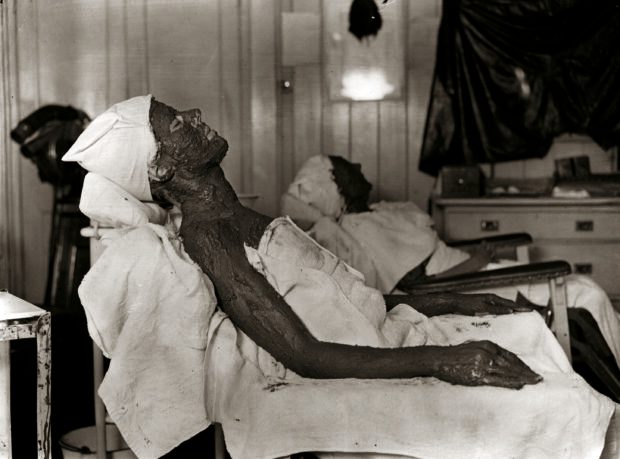
The 1903 Nobel Laureate died on the 4th of July, 1934, at the age of 66, from complications related to exposure to radium.