
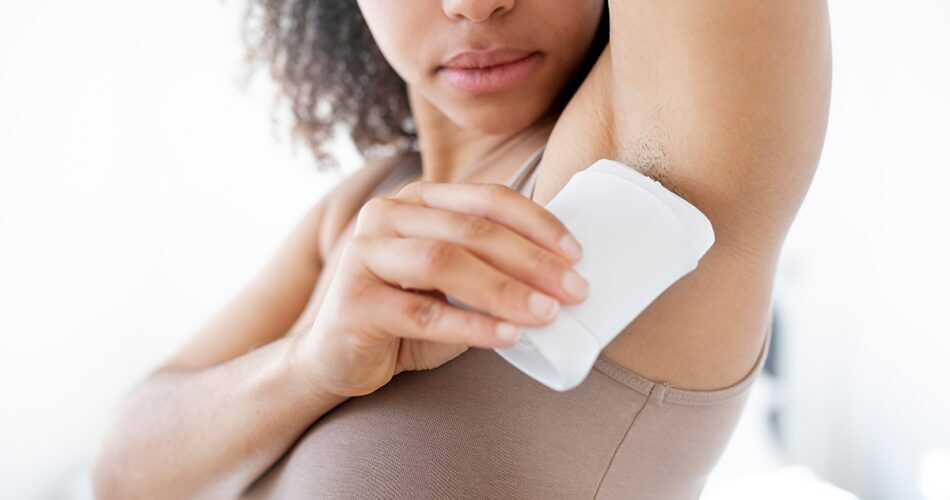
Are deodorants and antiperspirants safe during pregnancy? The ingredients of concern, what the evidence says about aluminum, and how to choose safely.
Navigating pregnancy-safe skincare can be complicated, but as a medical doctor with a focus on cosmetic ingredient safety, I’ve simplified the search for you. Visit my Skincare During Pregnancy: Begin Here guide for a full index of ingredient safety reviews, pregnancy and IVF-safe recommendations, and doctor-vetted product guides.
Today, I’m breaking down the safety profile of deodorants and antiperspirants during pregnancy and providing a practical guide to help you choose the best option for your body.
Quick Navigation
The Basics
Deodorants and Antiperspirants: The Difference
Deodorants mask odor with fragrance or antimicrobial agents, and antiperspirants reduce sweating by blocking the pores with aluminum-based compounds. One is not better than the other, and which one is used depends on personal preference.
I want to point out that no matter what the advertisement tells you, there is no true antiperspirant besides aluminum compounds. Aluminum-free products are considered deodorants, and they help mask body odor but do not control sweating.
If it is labeled antiperspirant, it should have aluminum.
Antiperspirants reduce sweating.
If it is labeled deodorant, it is aluminum-free.
Deodorants only mask body odor
The Verdict
Are Deodorants and Antiperspirants Pregnancy Safe?
Yes.
Both deodorants and antiperspirants are generally considered safe during pregnancy.
The biggest concern isn’t aluminum: it’s choosing products that avoid ingredients like triclosan, phthalates, and formaldehyde-releasing preservatives when possible. This guide explains the evidence behind aluminum, ingredients to avoid, and how to choose a pregnancy-safe deodorant or antiperspirant.
Checklist
How to Choose a Pregnancy-Safe Deodorant and Antiperspirant
Aluminum is absolutely safe if you want an antiperspirant.
Fragrance-free if you have sensitive skin
No phthalates or ‘added’ fragrance. Natural fragrances or those labeled ‘phthalate free’ are okay.
The label will read:
Anything with ‘phthalate’ in the ingredient list. Many labels will only have acronyms like DHEP or DBP.
No triclosan (also known as Microban)
The label will read:
Triclosan, Microban, 5-chloro-2-(2,4-dichlorophenoxy)phenol, trichloro-2-hydroxydiphenylether, and 2,4,4-trichloro-2-hydroxydiphenyl ether.
No formaldehyde or methylene glycol
The label will read:
Formaldehyde or methylene glycol. Exercise caution when the label says ‘formaldehyde free’ as it could contain methylene glycol.
No formaldehyde releasers
The label will read:
Quaternium-15, DMDM hydantoin, Imidazolidinyl urea, Diazolidinyl urea, Polyoxymethylene urea, Bronopol. Access the full list at the OSHA website.
No parabens
The label will read:
There are many types of parabens, and they will typically be written with the tag ‘paraben’ at the end.
Methylparaben, ethylparaben, propylparaben, butylparaben, isopropylparaben, and isobutylparaben are the most commonly used
Learn more:
Part I: Pregnancy Safe Skincare – Avoid These Ingredients.
Part II: Pregnancy Safe Skincare – Avoid These Ingredients.
Absorption
Can Deodorant or Antiperspirant Ingredients Reach Your Baby?
The ingredients in any topical product must first pass through your skin before they can enter your bloodstream. Your skin is an effective barrier (unless compromised due to conditions like dermatitis, eczema, or trauma, etc), and only a small amount of most cosmetic ingredients is absorbed through intact skin. Once it reaches the bloodstream, it would also need to cross the placenta.
This is why the safety of deodorant or antiperspirant ingredients during pregnancy cannot be judged simply by the fact that they are applied to the skin. Instead, each ingredient is evaluated individually based on the available scientific evidence, including how much is absorbed through the skin and what is known about its safety during pregnancy.
Overall, the amount of most deodorant and antiperspirant ingredients absorbed through healthy skin is very low.
The key is to choose products that avoid ingredients with known or potential pregnancy safety concerns while using those that have reassuring safety data.
One ingredient that often raises questions is aluminum, which is used in antiperspirants. In the next section, we’ll look at how much aluminum is actually absorbed through the skin and what the research tells us about its safety during pregnancy.
The Aluminum Question
Is Aluminum in Antiperspirants Safe During Pregnancy?
Aluminum is the active ingredient that allows antiperspirants to reduce sweating, but it is also the ingredient that raises concern. Fortunately, the available evidence is reassuring.
How much aluminum is absorbed through the skin?
One of the biggest concerns is if and how much aluminum from an antiperspirant is absorbed into the body. Fortunately, the amount appears to be extremely small.
A human study found that only 0.012% of the aluminum applied to the underarms was absorbed through the skin. While the exact amount absorbed may vary depending on the product and skin condition, healthy skin acts as an effective barrier, limiting systemic absorption.
It’s also important to remember that aluminum is naturally present in our environment. We are exposed to it every day through the air we breathe, the food we eat, the water we drink, and even certain medications, such as some antacids. For most people, these sources contribute far more to overall aluminum exposure than the use of an antiperspirant.
Aluminum and breast cancer?
Much of the concern surrounding aluminum stems from claims that antiperspirants may increase the risk of breast cancer.
Some laboratory (in vitro) studies have shown that aluminum can influence estrogen-related pathways in breast cells, which can promote growth of cancerous cells. However, these studies are performed in isolated cells and do not reflect what actually happens in the human body, where only tiny amounts of aluminum are absorbed through the skin.
More importantly, studies in people have not shown a convincing association between antiperspirant use and breast cancer. A 2023 review evaluating the available evidence through 2022 concluded that there is no convincing evidence linking daily aluminum exposure from antiperspirants to an increased risk of breast cancer.
What about pregnancy?
Like many substances, aluminum can be harmful to the developing fetus at very high doses.
Animal studies have shown that exposure to large amounts of aluminum during pregnancy may affect fetal development.
With antiperspirants, only a tiny fraction of the aluminum applied to the underarms is absorbed. Based on the available evidence, this level of exposure is not considered a concern during pregnancy.
The bottom line
Current evidence suggests that aluminum-containing antiperspirants are safe to use during pregnancy. While aluminum has received significant attention over the years, there is no convincing evidence that normal use of aluminum-containing antiperspirants increases the risk of birth defects or breast cancer.
If you prefer to avoid aluminum for personal reasons, you can certainly choose a deodorant instead of an antiperspirant. However, based on the available scientific evidence, there is no medical reason to avoid aluminum-containing antiperspirants during pregnancy.
Trivia
Why no deodorant before a mammogram
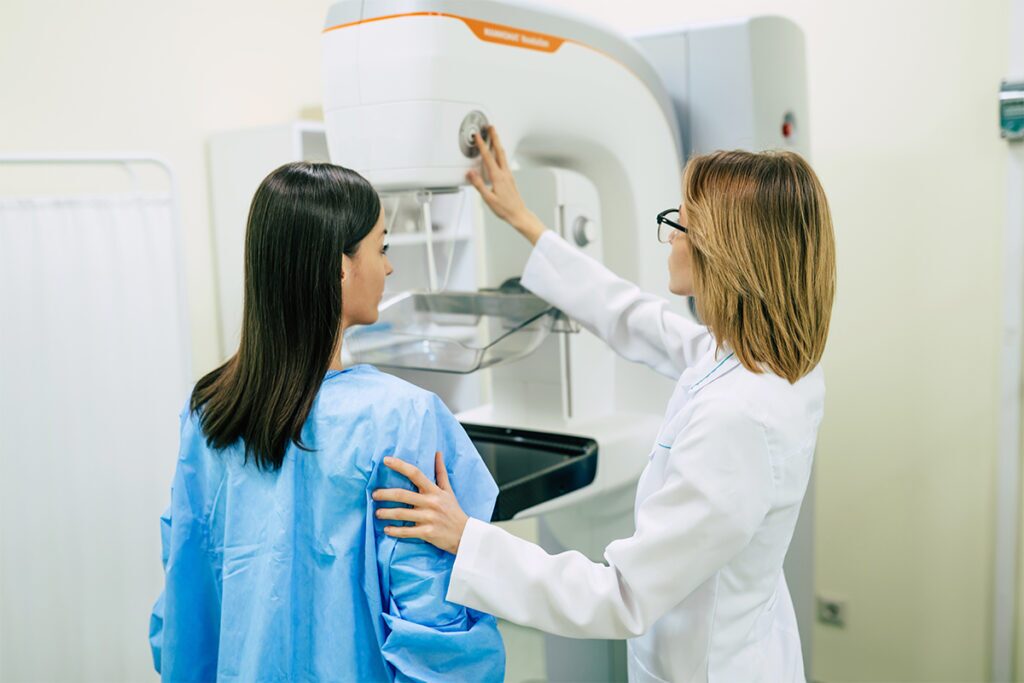
If you have ever had a mammogram, you must have been instructed to avoid using deodorants and antiperspirants on the day of the procedure. Many of these products contain aluminum and can show up on the mammogram as tiny white specks, which can look like one of the abnormalities that can be suggestive of cancer.
Takeaway
The short version
Both deodorants and antiperspirants are safe to use while pregnant as long as certain pregnancy-unsafe chemicals are not present in your product.
Aluminum can cause fetal abnormalities, but only with extremely high doses, which is unlikely to happen with the use of antiperspirants.
Aluminum in antiperspirants is safe to use, and there is no concrete evidence right now to suggest that it can cause breast cancer.
Aluminum containing antiperspirants are considered pregnancy-safe antiperspirants, as there is no significant absorption of aluminum through the skin to cause fetal abnormalities.
FAQ
Frequently asked questions
Are deodorants safe to use during pregnancy?
Yes. Deodorants are generally considered safe during pregnancy. Choose products that avoid ingredients of concern such as triclosan, phthalates, formaldehyde, and formaldehyde-releasing preservatives.
Are antiperspirants safe during pregnancy?
Yes. Aluminum-containing antiperspirants are generally considered safe to use during pregnancy. The available evidence indicates that only a very small amount of aluminum is absorbed through healthy skin.
Is aluminum in antiperspirant safe during pregnancy?
Yes. Current evidence suggests that the small amount of aluminum absorbed from normal antiperspirant use is not considered a concern during pregnancy.
What deodorant ingredients should I avoid during pregnancy?
During pregnancy, consider avoiding triclosan, phthalates, formaldehyde, formaldehyde releasers, and parabens. Checking the ingredient label can help you identify these ingredients.
Is aluminum-free deodorant better during pregnancy?
Not necessarily. Aluminum-free products are deodorants rather than true antiperspirants and primarily help control body odor rather than reduce sweating. Choosing between a deodorant and antiperspirant is largely a matter of personal preference.
Does deodorant get into the bloodstream during pregnancy?
Typically, only a small amount of most cosmetic ingredients is absorbed through healthy, intact skin. Although we don’t have studies showing how much of a deodorant ingredient crosses the placenta to the baby, the overall risk is considered very low.
Questions about pregnancy-safe personal care?
If you would like doctor-vetted guidance on choosing deodorants, antiperspirants, or any other part of your pregnancy-safe routine, I would love to help.