

Navigating pregnancy-safe skincare can be complicated, but as a medical doctor with a focus on cosmetic ingredient safety, I’ve simplified the search for you. Visit my Skincare During Pregnancy – Begin Here guide for a full index of ingredient safety reviews, pregnancy and IVF-safe recommendations, and doctor-vetted product guides.
Today is about nano mineral sunscreens.
Many women specifically look for pregnancy-safe mineral sunscreen options to minimize exposure to chemical sunscreen filters during pregnancy.
One of the most common questions I receive is whether nano mineral sunscreen is pregnancy safe and whether it is truly safer than chemical sunscreen.
Mineral sunscreen is commonly recommended during pregnancy because zinc oxide and titanium dioxide primarily remain on the skin’s surface.
Mineral formulations are also considered gentler and possibly safer than mineral sunscreens during pregnancy.
(For more on the debate about the safety of chemical vs mineral sunscreens in pregnancy: Is sunscreen safe in pregnancy?)
However, the white cast that accompanies mineral sunscreens is off-putting for many users and makes it harder for them to stick to it.
As a solution, the beauty industry came up with what is called ‘nano’ formulations for mineral sunscreens.
At the outset, I want to bring to your attention that this article only deals with the current evidence we have about topically applied nano-mineral sunscreens. Nano mineral sunscreen in spray formulation is not recommended due to inhalational injury to the lungs, and any information here is only in relation to topical nano mineral sunscreens.
Quick Navigation
What are nanoformulations or nanoparticles in sunscreens?
Nanoparticles are particles smaller than 100 nanometers (one-billionth of a meter).
Nano sunscreen is created by breaking down the mineral filters- zinc oxide and titanium dioxide- into ultra-fine particles that are smaller than 100 nanometers.
Nanotechnology is used not just in your cosmetics but also in medicines (targeted drug delivery to specific cells), textiles (stain and odor-resistant clothing), electronics (coating for phone displays), water purifications, and other industries.
Benefits of nanoparticles in mineral sunscreens?
The use of nanoparticles significantly improves the cosmesis and ease of application of sunscreens while maintaining photoprotection qualities. This is one reason nano mineral sunscreen formulations have become increasingly popular, including among pregnant women.
The sensory aspect of a traditional mineral sunscreen can be unpleasant- thick, poor spreadability, white cast.
Use of nanoparticles creates a lighter, silkier formulation that spreads easily, feels pleasant, and significantly reduces the white cast.
Concerns with the use of topical nanoparticles in sunscreens
There are 2 primary concerns about the use of nanoparticles:
- Absorption into the bloodstream from skin due to their tiny size.
- The inherent carcinogenic potential of nanoparticles in sunscreens.
Mineral filters (Zinc Oxide and Titanium Dioxide) are widely recommended as pregnancy-safe because they primarily remain on the skin’s surface to reflect UV rays, rather than being absorbed into the body.
However, making these filters nano-sized has raised questions about whether they can still be considered pregnancy safe.
Since these particles have been engineered to be ultrasmall, there is a concern that they might penetrate the skin, enter the bloodstream, and potentially negate the inherent safety advantages that traditional mineral filters provide during pregnancy due to their large size.
Here are a few studies that talk about these nano filters:
- Hansen et al studied rats after topical application of nano zinc oxide and found that it remains in the stratum corneum with no evidence of it in urine, feces, organs, or tissue samples. Since the stratum corneum regularly undergoes shedding, the accumulation of nanoparticles, theoretically, should not occur.
- The European Commission’s Scientific Committee on Consumer Safety (SCCS) states that topically applied nano zinc oxide at a concentration of upto 25% in sunscreens does not have a risk of adverse effect on humans. Spray form, though, is another matter and is not recommended due to inhalational lung injuries.
- The above findings, however, are in contrast to those by Gulson et al., which found an increased amount of zinc in the blood and urine of human participants after 5 days of application of nano zinc oxide, with the levels in female participants higher than those of the male, an observation they could not explain.
- Nano titanium dioxide has also come under scrutiny as studies in pregnant rat models have shown that exposure to it (not necessarily or only through nano sunscreens, as they can be found in paints, ink, food, etc.) leads to neurobehavioral changes in the offspring and changes in maternal gut bacteria that caused an increase in the blood glucose of the pregnant rats.
- On the other hand, there are studies (Sadrieh et al., Crosera M et al.) that have found that topically applied nano titanium dioxide remains only in the skin, which makes it as safe as a non-nano formulation.
- There are also concerns (Tran D T, Salmon R) that, unlike how non-nano mineral sunscreens work (by reflecting the sunrays), the non-nano titanium dioxide and zinc oxide absorb UV rays, which changes their structure, resulting in the generation of free radicals that can alter the DNA and induce cancer.
To reduce reactivity, nano sunscreens are often surface-coated with silica and alumina.
While evidence linking nano-mineral sunscreens to cancer remains inconclusive, the link between sun exposure and skin cancer is undeniable.
The verdict?
Despite the concerns, topical nanosunscreens are generally considered safe to use, both for the general population and during pregnancy.
There is no concrete evidence yet to state that they are harmful to human health.
Most studies have found them limited to the skin, with no penetration into the bloodstream.
In today’s world, there is a good chance that your exposure to zinc oxide and titanium dioxide is more from your food and other everyday items than from your nano sunscreen.
If you are pregnant and concerned, you might consider using a non-nano formulation that is tinted- it will help with the white cast and give better cosmesis.
Read- Best tinted sunscreens for pregnancy- Safe mineral option for pregnant women.
Takeaway
- Topical nano mineral sunscreens are largely considered pregnancy safe despite concerns of their impact due to their ultrafine size and possible absorption into the bloodstream.
- In today’s world, there is a good chance that your exposure to zinc oxide and titanium dioxide is more from your food and other everyday items than from your nano sunscreen.
- However, if you are concerned, you might consider using a non-nano formulation that is tinted- it will help with the white cast and give better cosmesis.
Trivia
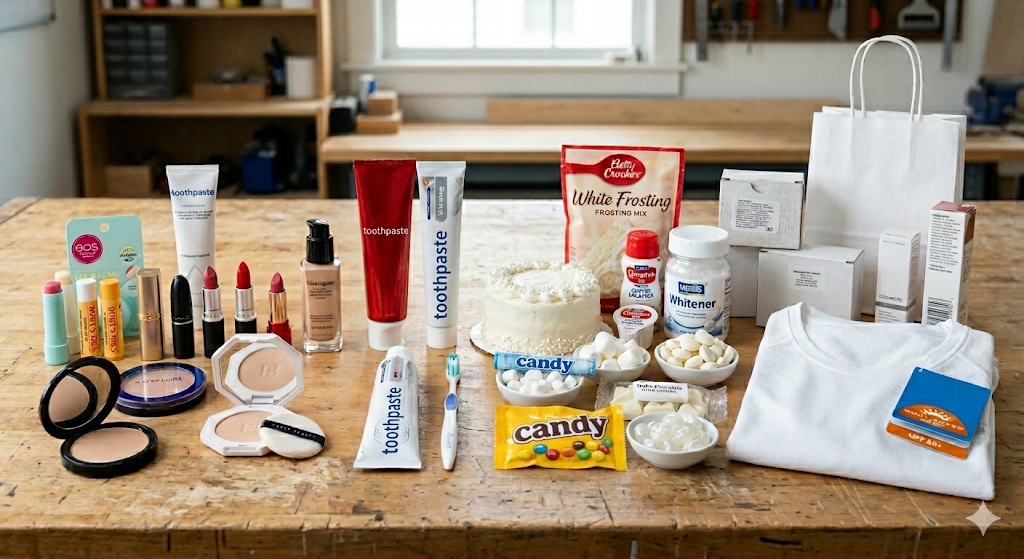
They’re not just in your sunscreens.
Here is a short list of everyday household items that could contain nano zinc oxide and nano titanium dioxide:
- Cosmetics (lip balm, lipsticks, powder, foundation)
- Toothpaste, especially whitening pastes
- Processed food to give a bright white color. Food items like cake decorations, coffee creams, candies, etc.
- Paper packagings
- SPF clothing.
Common Questions About Nano Mineral Sunscreen During Pregnancy
Yes. Mineral sunscreen is generally considered pregnancy safe because ingredients like zinc oxide and titanium dioxide mostly remain on the surface of the skin.
Current evidence suggests that topical nano mineral sunscreen is likely safe during pregnancy, although research is still ongoing.
Mineral sunscreen is often preferred because it reflects UV rays and is less likely to irritate sensitive pregnancy skin.
Yes. Zinc oxide sunscreen is widely considered safe during pregnancy and is commonly recommended by dermatologists.
Both are generally considered safe, but some women prefer non-nano formulations for extra peace of mind.
Current research does not show clear evidence that topical nano mineral sunscreen harms pregnancy. However, if you are more comfortable avoiding nano formulations, non-nano tinted mineral sunscreens are reasonable alternatives.