Navigating pregnancy-safe skincare can be complicated, but as a medical doctor with a focus on cosmetic ingredient safety, I’ve simplified the search for you. Visit my Skincare During Pregnancy – Begin Here guide for a full index of ingredient safety reviews, pregnancy and IVF-safe recommendations, and doctor-vetted product guides.
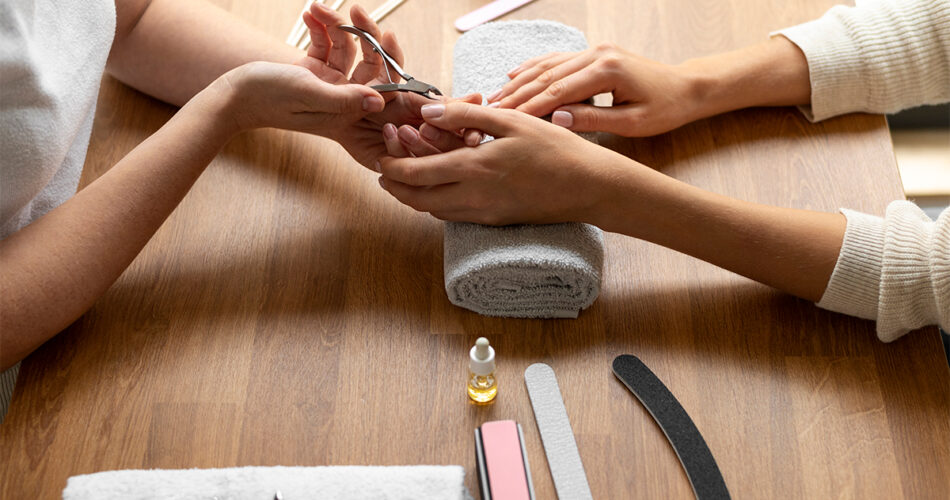
Pregnancy comes with many do’s and don’ts. While some activities are best avoided, there are some that you should not worry about. If you are wondering whether manicures or pedicures are safe during pregnancy, you are not alone. What about other nail treatments? Are acrylic nails safe for pregnancy?
Read on to have all your questions answered.
Quick Navigation
- Are manicures and pedicures safe while pregnant?
- Chemical exposure in salons & risks in salon workers.
- Choosing the right salon.
- Are acrylic nails safe for pregnancy?
- Are gel nail treatments pregnancy-safe?
- Can foot and hand massages induce labor?
- What additional precautions can I take?
- How to choose a pregnancy-safe nail polish?
- Takeaway.
- Trivia.
Are manicures and pedicures safe while pregnant?
Generally speaking, yes!
Manicures and pedicures are safe while pregnant.
There is no evidence that getting the occasional salon nail treatment harms your pregnancy or your baby’s health.
There are a few safety measures and safer choices you can make to ensure a carefree, relaxing experience.
Chemical exposure in salons & risks in salon workers.
Most products used in manicures and pedicures, such as polish, polish remover, and primers, contain volatile organic compounds (VOCs).
The three most commonly found chemicals are:
- Toluene – used as a solvent to help with smooth application and quick drying.
- Formaldehyde – used as a preservative and a nail hardener.
- Dibutyl phthalate (DBP) – makes the polish flexible and crack-resistant.
Although these three (known as the ‘toxic trio’) and other chemicals have been linked to potentially dangerous health conditions like cancer and adverse fertility or pregnancy outcomes, there is no evidence that occasional use of them, as found in nail products, has an unfavorable outcome in pregnancy.
However, caution is warranted if you are pregnant or planning to get pregnant and work in a nail salon.
As a salon worker, you are at risk from exposure to chemicals routinely used for nail treatments, which can impact your and the unborn child’s health.
This risk is determined by factors like:
- Working conditions (e.g., ventilation of the room),
- Personal protection (e.g., use of gloves, not eating or drinking on the work floor, use of goggles and N95 masks or respirators),
- Hours of work.
It is recommended that salon workers use face masks to protect themselves from fumes and toxic particulate matter.
As stated by OSHA (Occupational Safety & Hazard Administration), NIOSH (National Institute for Occupational Safety & Health) approved N95 face masks and respirators are recommended. A surgical mask is not helpful in this scenario.
Click here to read the OSHA advisory about the hazards of working in a nail salon and how to protect yourself. This advisory works well for salons offering multiple services.
Choosing the right salon
Choosing the right salon is wise regardless of whether you are pregnant, and it becomes even more essential while pregnant.
Here are some points to consider:
- A salon that fails to sterilize its equipment correctly is a breeding ground for infections such as athlete’s foot, paronychia, and warts.
The ideal method, as recommended by the WHO, is autoclaving. Ask the staff about their sterilization practices and look for color-changing pouches or tapes on the instruments that change color when adequately sterilized in an autoclave. - Certain tools, such as nail files, manicure sticks, pumice stones, and buffers, should never be reused! You can request that new files or buffers be opened before you.
- The EPA (Environmental Protection Agency) requires that all pedicure baths be sanitized between customers and nightly with an EPA-approved hospital-grade disinfectant.
- Nail treatments often emit volatile gases into the air. Pregnancy heightens your sense of smell, which can make you more sensitive to the fumes that are produced by the chemicals used for nail treatments. Look for a well-ventilated room for your nail treatments.
Don’t be afraid to ask questions at the salon.
Don’t hesitate to request a copy of the disinfection logs.
Lastly, if something does not feel right, it probably is not.
Are acrylic nails safe for pregnancy?
Acrylic nails are one of the most popular methods of nail extension, giving beautiful results and making you feel like a million dollars. But are they safe while pregnant?
There is no definite evidence that acrylic nail treatments are not safe while pregnant, but you should consider the amount of chemicals used in this process before you decide to go for it.
While acrylic nails are more durable and less prone to breaking, they use methyl methacrylate (MMA) as a bonding agent to affix the artificial nail and ensure a firm hold on the natural nail.
MMA is a volatile compound released into the air, and inhalation can cause respiratory difficulties.
MMA can cause multiple health issues, such as allergic reactions, damage to the nail plate, and nail deformity.
High concentrations of MMA can even cause unconsciousness.
In the 1970s, the FDA received multiple reports of allergic reactions, nail damage, and deformity with MMA. Declaring it ‘a poisonous and deleterious substance,’ the FDA banned the use of 100% MMA nail products from the market.
MMA is still used at lower concentrations for nail treatments, and EMA (ethyl methacrylate) has been introduced as a substitute.
EMA has a milder odor and less adhesive than MMA and is generally considered safe for nail treatments.
However, EMA is in the same chemical class as MMA and has a similar side-effect profile.
If you must undergo acrylic nail treatment while pregnant, ensure the salon uses MMA-free products, that the treatment is done in a well-ventilated room, and that it is performed only by trained professionals.
Are gel nail treatments pregnancy-safe?
While gel treatment may be done while pregnant, you may want to take extra care as gel nails, like acrylic nails, require more chemicals that may make you feel sick.
Your skin may be sensitive during pregnancy and may react adversely to chemicals used, leading to contact dermatitis.
If you already have gel treatment and want to remove it, keep your fingers in acetone for as short a time as possible, as it can be very drying and the fumes can make you feel ill.
Gel nails use UV lamps to cure the polish. UV lamps used in these settings are considered safe by the Skin Cancer Foundation. You may consider applying a broad-spectrum sunscreen to protect your hands if you choose to take extra care.
And, of course, choose a well-ventilated salon and get your nails done only by trained professionals.
Latest development: The EU has recently banned Trimethylbenzoyl Diphenylphosphine Oxide (TPO), a chemical used in many gel nail polishes that reacts under UV light and gives nails a glass finish, citing studies linking it to fertility issues.
Can foot and hand massages induce labor?
Manicures and pedicures often include a relaxing massage. You must have heard it can trigger labor by stimulating pressure points in your hands and feet.
While we don’t know if this is true, it is better to play it safe- avoid the massage portion of your treatment and save it for after the baby arrives.
What additional precautions can I take?
- The chemicals used in nail treatments are mostly volatile and inhaled, so they quickly evaporate into the air. With the occasional exposure while pregnant, the concern is that the smell or fumes might make you feel sick and nauseous. Using N95 face masks or applying nail polish in a well-ventilated area is an added precaution that you can take.
- Avoid the foot soaks if you have any open cuts or wounds on your feet, as this will make it easier for microorganisms to enter the body and cause an infection.
- Another option, if you wish to minimize your exposure to chemicals, is to avoid any nail special treatments like acrylic or gel nails for the first trimester, as that is the time period when your baby’s organs are starting to form and is the period when the major birth defects of the body and the internal organs are more likely to happen. You can instead go for a clean, manicured look.
- Seek your treating doctor’s opinion, who can give you the right advice based on your personal and medical history.
How to choose a pregnancy-safe nail polish?
As awareness of toxic chemicals in nail polish grows, the cosmetic industry is stepping in to meet a growing demand for clean nail polish.
These nail polishes are labeled as:
- ‘3-free’ (free of toluene, formaldehyde, DBP)
- ‘5-free’ (free of toluene, formaldehyde, DBP, and formaldehyde resin that is made from formaldehyde to make the polish hardy and resilient, camphor that gives the paint a glossy finish, but the smell can make you dizzy and nauseous)
- ‘7-free’ (free of toluene, formaldehyde, DBP, formaldehyde resin, camphor, ethyl tosylamide to make the polish flexible and hardy, but is an endocrine disrupter, and xylene that is used as a solvent for a smooth consistency, but is an irritant and can cause headache and dizziness.
However, there is no evidence that one type or brand of nail polish is safer for occasional use than the other.
As an expectant mom, you may use these as a better option for you and your baby.
Takeaway
Are manicures safe during pregnancy? Are pedicures safe while pregnant? The good news is that getting the occasional manicure and pedicure while pregnant is safe. Make sure you choose a salon that meets sanitation standards, is staffed by trained staff, and is well-ventilated.
You may choose to avoid specific treatments, such as acrylic or gel nails, which often contain more chemicals that can make you feel sick or dizzy.
Trivia
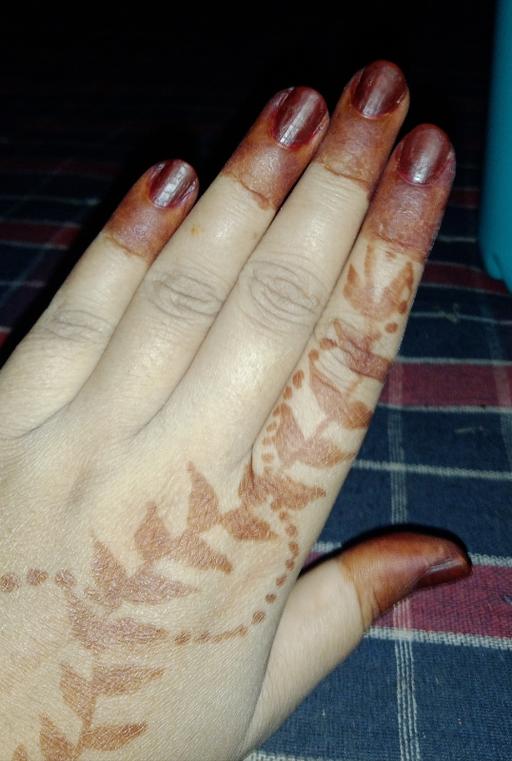
Henna not only imparts a reddish-brown hue on the nails but is also believed to be protective for them due to its antifungal and antibacterial properties.
Nail polish is said to have originated in China around 3000 BC. During the Ming dynasty, it was made from a blend of beeswax, egg whites, gelatin, vegetable dyes, and gum Arabic.
In Egypt, the high society would paint their nails with henna, which gave them a reddish-brown color.
Henna is still used as nail paint, especially at weddings and other special events such as festivals, in the Indian subcontinent and the Middle East.