
A closer look at the retinyl palmitate in Bio-Oil, what the Natural version changes, and why I do not recommend the original while you are expecting.
Navigating pregnancy-safe skincare can be complicated, but as a medical doctor with a focus on cosmetic ingredient safety, I’ve simplified the search for you. Visit my Skincare During Pregnancy: Begin Here guide for a full index of ingredient safety reviews, pregnancy and IVF-safe recommendations, and doctor-vetted product guides.
Stretch marks prevention and treatment targeted at pregnant moms is a big business. Women actively seek out remedies for it and are willing to splurge. A study published in BMC Pregnancy & Childbirth collected data from 753 pregnant women: 78.2% used a product targeted for stretch marks, of which 60.9% used Bio-Oil.
Bio-Oil is undoubtedly popular, but is it safe?
Quick Navigation
The Basics
Is Bio-Oil Safe To Use During Pregnancy?
Bio-Oil currently has two products:
Bio-Oil Skincare Oil (Original)
Bio-Oil Skincare Oil (Natural)
The original version is formulated in a mineral oil (liquid paraffin) base with synthetic fragrance and botanical ingredients. The natural version omits the mineral oil and synthetic fragrance, and relies entirely on natural ingredients.
The information above relates to the original version. You will find more information on the natural version as you go down.
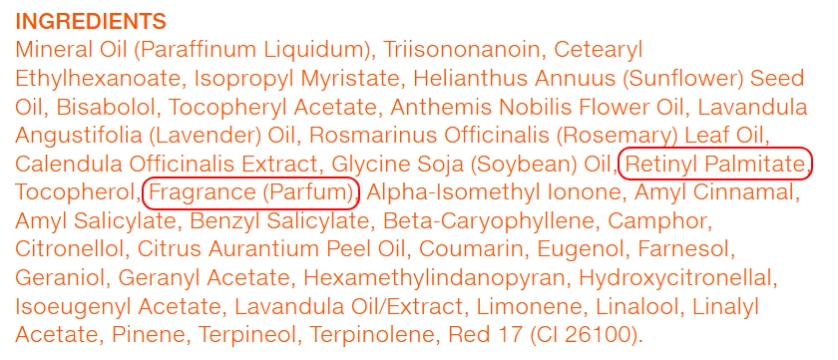
This is the ingredients list of the Bio-Oil Original from the Bio-Oil website, and I have multiple concerns when I look at it.
Primary Concern
Primary Concern: Retinyl Palmitate
Retinyl palmitate is a retinoid, a member of the vitamin A derivative family widely used in skincare for its collagen-boosting, acne-clearing, texture-refining, and hyperpigmentation-fading benefits. Among the many types of retinoids, retinyl palmitate is considered the mildest.
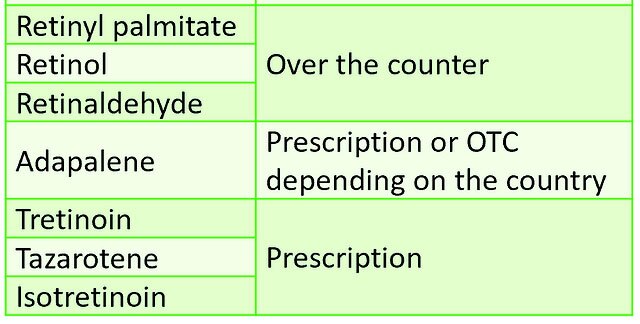 Types of retinoids commonly used in skincare. All in the list, except Isotretinoin, are topical applications only.
 Some retinoids, particularly oral formulations and topical prescription-strength versions, have been linked to fetal abnormalities when used during pregnancy, a condition known as Fetal Retinoid Syndrome.
Because retinyl palmitate belongs to the same chemical family, even though it’s the weakest form, the entire retinoid group is generally flagged as unsafe for pregnant women.
The exact risk from over-the-counter cosmetic products containing retinoids isn’t well understood. Studies suggest that systemic absorption from topical retinoids is low, but there’s no established threshold for what level of exposure could cause fetal harm.
Given this uncertainty, the safest approach is to avoid retinoids altogether during pregnancy: it’s just a short nine months out of your life to hit pause for peace of mind.
Learn more:
Is it safe to use retinoids or vitamin A creams during pregnancy?
Secondary Concern
Secondary concern: Fragrance (parfum)
While perfume in skincare might feel like a luxurious self-care ritual, it can hide a heady concoction of endocrine-disrupting chemicals like phthalates, unless explicitly stated otherwise as being ‘phthalate-free’ (a claim I treat with healthy skepticism, given the risk of cross-contamination with other chemical batches).
Fragrances are also common sensitizers, making them especially risky when pregnancy hormones have already left your skin vulnerable.
Because of this, fragrance (parfum/perfume) is a firm “no” on my pregnancy-safe skincare list.
Always remember, you do not need fragrance for a product to work!
Learn more:
Are phthalates and added fragrance in skincare products pregnancy safe?
Other Concerns
Other concerns: The long list of botanical extracts
Natural or botanical extracts are often viewed as gentle and mild. While effective, their complex chemical profiles can also cause skin sensitization, leading to irritation, redness, dermatitis, and allergic reactions. Because pregnancy-induced hormonal shifts heighten skin reactivity, cautious use of active botanicals is recommended.
My Position
Why I Don’t Recommend Bio-Oil Even Though the Risk Is Likely Low
The data that we have on the teratogenicity (birth defects) potential of retinoids is largely based on the effects of oral retinoids used by pregnant women.
Regarding topical retinoids, the research focuses on prescription-strength topical retinoids, not over-the-counter topical retinoids.
In all fairness to Bio-Oil, it contains the topical, non-prescription retinoid retinyl palmitate, which is the mildest retinoid. Absorption from intact skin is expected to be minimal and thus, overall risk is low.
However, as a medical professional and knowing what I know about retinoids (the group to which retinyl palmitate belongs), I cannot in conscience recommend that a pregnant woman use Bio-Oil.
In fact, I completely avoided it during my own pregnancy.
Skincare goals should never take precedence over standard medical guidance, which advises against using any retinoids while pregnant or trying to conceive.
When it comes to pregnancy, avoiding ingredients that carry even a theoretical risk is a completely reasonable and prudent choice.
As always, please consult your healthcare provider if you have any doubts about your skincare routine.
Reassurance
Used Bio-Oil / Topical Retinoid Already? Don’t Panic!
If you have used Bio-Oil or any topical retinoid, the good news is that a Nordic study published in April 2026 that studied the use of topical prescription retinoid in women of reproductive age found no increased risk of major congenital malformation.
Given that over-the-counter products like Bio-Oil are even milder, your actual risk remains exceptionally low.
However, I recommend letting your doctor know so they can assess the risk based on the type of retinoid you used and offer tailored guidance.
Quick Summary
Key Takeaways
If you’re wondering whether Bio-Oil is pregnancy safe, here’s a quick summary:
Bio-Oil contains retinyl palmitate, a type of retinoid.
Retinoids are generally avoided during pregnancy because of potential risks to the developing baby.
There is no scientific research that topical retinyl palmitate causes birth defects, but safety data remains limited.
The pregnancy-related data we have on retinoids (the group to which retinyl palmitate belongs) are based on oral and topical prescription retinoids, not on over-the-counter cosmetic retinoids like retinyl palmitate.
There is no known definitive method to avoid pregnancy stretch marks, but there are non-retinoid pregnancy-safe skincare products available to try.
The Other View
Why Do Some Sources Say Bio-Oil Is Safe?
When some sources say that Bio-Oil is pregnancy safe, it is largely because they are weighing the evidence differently.
Retinyl palmitate, the retinoid in Bio-Oil, is an over-the-counter retinoid and the mildest of them all. Given that even topical prescription retinoids have been shown to be absorbed minimally, ‘giving rise to low or hardly detectable bodyloads’ (Schaefer H), some consider Bio-Oil acceptable.
Furthermore, there is no evidence that over-the-counter retinoids as seen in cosmetic products have led to birth defects when used topically.
Recommendations are based on risk tolerance, and this is where opinions differ: some focus on the above facts and find Bio-Oil safe to use, whereas others, like me, take a more precautionary approach.
Although the theoretical risk appears to be extremely low, pregnancy is a unique situation where I prefer to avoid ingredients from the retinoid family when other alternatives are available.
The Guidelines
What Do Health Organizations Say?
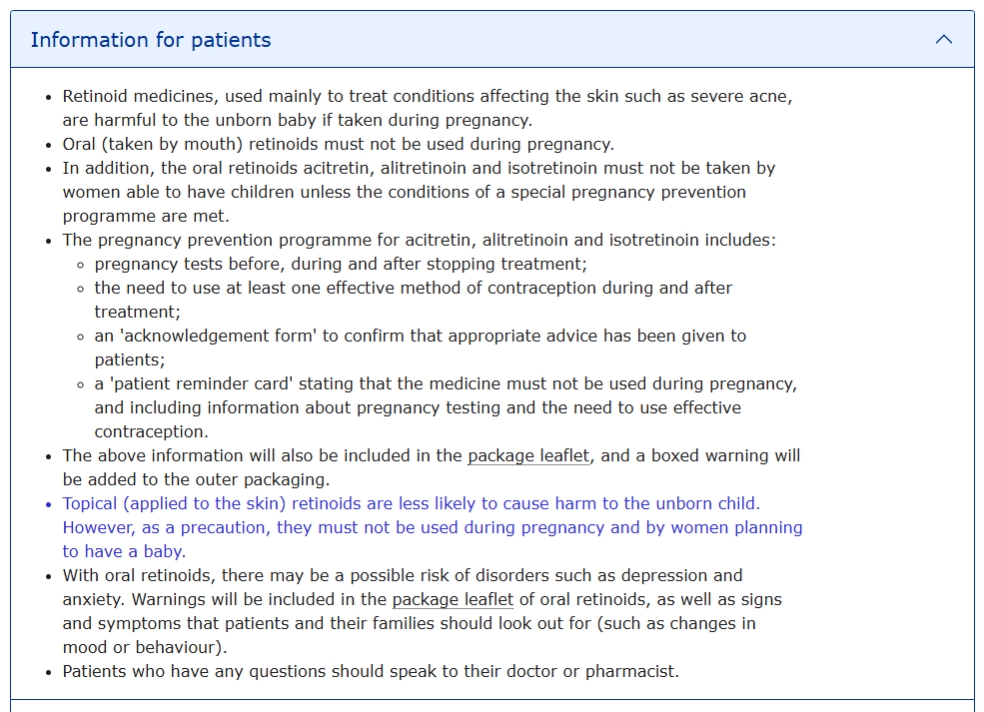
Here is what various health bodies say about the use of retinoids in pregnancy:
ACOG (American College of Obstetrics & Gynecology)
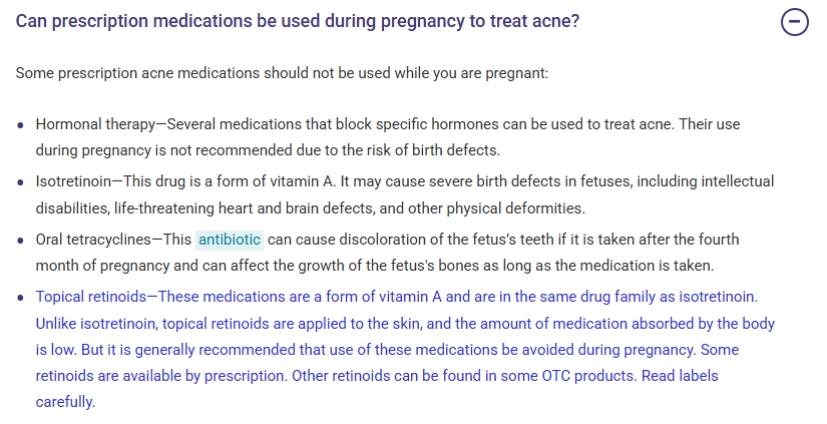
EMA (European Medicines Agency)
AAD (American Academy of Dermatology)
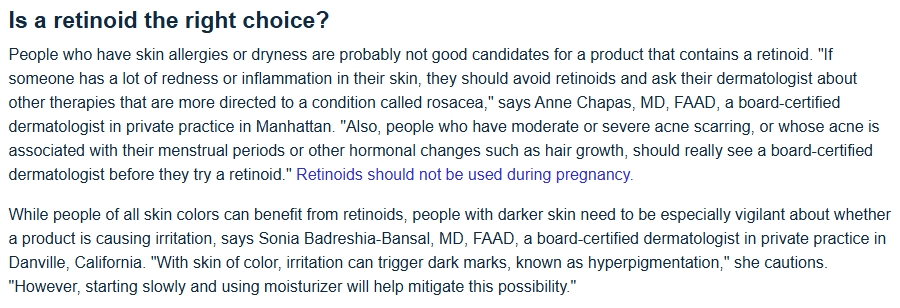
Based on the above recommendations, using other alternatives appear to be a better choice.
The Evidence
Does Bio-Oil Really Prevent Stretch Marks?
Bio-Oil is the most popular product marketed for prevention and treatment of stretch marks, especially pregnancy stretch marks.
However, there is no convincing evidence that it effectively prevents stretch marks, and that can be said for any product that is marketed for pregnancy stretch marks prevention!
Stretch marks develop when the skin stretches faster than the collagen and elastin fibers beneath it can adapt. There is no one product that can prevent them, as genetics (the strongest predictor), hormonal changes, and pregnancy all play a major role in determining their development.
However, you can reduce your risk by:
Maintaining steady, healthy pregnancy weight gain.
Keeping your skin well moisturized to reduce dryness and itching.
Eating a balanced diet with adequate protein and vitamins to support skin health.
Staying well hydrated.
The Natural Version
Is Bio-Oil Natural Safe During Pregnancy?
Let us have a look at the ingredients list of Bio-Oil Natural:
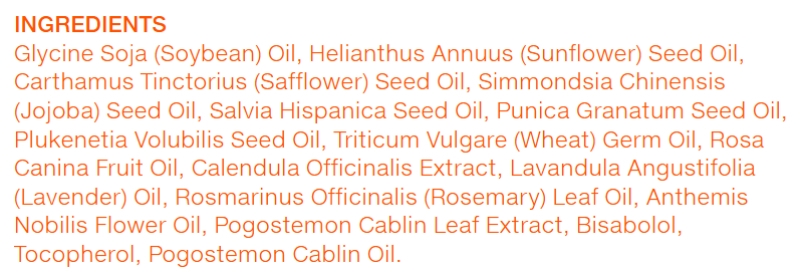 Source: Bio-Oil
 The major difference from the original Bio-Oil is that it is missing liquid paraffin and retinyl palmitate.
What we have instead is a blend of essential oils in plant-derived oils.
Certain essential oils (for eg. rosemary essential oil) are uterine stimulants (contract the uterus) in pure, undiluted, and highly concentrated forms. In cosmetic products, they are used in diluted and very low concentrations and are safe to use in such formulations.
While these diluted amounts are largely considered safe, some clinicians might prefer to omit such products in certain cases, like high-risk pregnancies.
Check with your Obgyn to see if you can use this safely.
One thing to be aware of with Bio-Oil Natural is the presence of multiple essential oils in the formula, which can be sensitizing and can cause contact dermatitis, especially when your skin is reactive due to pregnancy hormone shifts.
I would recommend a patch test before you use it.
Learn more:
Essential oil or aromatherapy in pregnancy.
Alternatives
Pregnancy-Safe Alternatives / What I Used During My Pregnancy
Like many expectant mothers, I desperately wanted to avoid stretch marks and spent countless hours researching strategies. While no topical product or routine has been proven to prevent stretch marks, and genetics plays the biggest role, I was fortunate not to develop any during my pregnancy.
Although I can’t say that my routine prevented stretch marks, here’s what I personally did:
Drink an adequate amount of water on a daily basis starting from the very beginning of your pregnancy.
I had an IVF pregnancy thus could time things, and hydrating topicals were used since the time my implantation was successful.
Here is my full routine:
My pregnancy stretch marks prevention routine: What I did for zero stretch marks.
Learn more:
How to prevent pregnancy stretch marks
Best pregnancy stretch marks creams and oils
Takeaway
Takeaway
Bio-Oil is touted as an effective remedy for stretch marks that is safe during pregnancy and lactation.
One of the active ingredients in it is retinyl palmitate, a chemical that belongs to the retinoid group that is contraindicated in pregnancy.
Retinyl palmitate is also a commonly found chemical in many OTC cosmetics. So far, the fetal malformations described have been with prescription retinoids (oral and topical) and not with those found in OTC cosmetics.
However, we still do not have enough data to confidently say that retinyl palmitate is safe to use in pregnancy and cannot confidently state that it is entirely safe to use Bio-Oil when pregnant.
FAQ
Frequently Asked Questions
Is Bio-Oil safe to use during pregnancy?
Bio-Oil is generally not recommended during pregnancy because it contains retinyl palmitate. Although topical retinyl palmitate has not been proven to cause birth defects, there is not enough evidence to confirm it is safe for use during pregnancy. Many healthcare professionals recommend choosing pregnancy-safe skincare products that are free of retinoids instead.
Why is retinyl palmitate considered unsafe during pregnancy?
Retinyl palmitate belongs to the class of drugs known as retinoids, which are generally avoided during pregnancy due to potential risks to the developing baby. While prescription retinoids are known to pose risks, the safety of topical retinyl palmitate during pregnancy has not been fully established.
Can I use Bio-Oil while breastfeeding?
Bio-Oil can be used while breastfeeding, but it is best to discuss its use with your healthcare provider. The amount of retinyl palmitate that may enter breast milk after topical application is believed to be very small.
What are pregnancy-safe alternatives to Bio-Oil?
If you want to keep your skin moisturized during pregnancy, consider pregnancy-safe skincare products containing ingredients such as shea butter, cocoa butter, hyaluronic acid, glycerin, or squalane etc. Choosing products without retinoids is generally the safest approach during pregnancy.
Does Bio-Oil help prevent stretch marks during pregnancy?
Bio-Oil is marketed to improve the appearance of stretch marks, scars, and uneven skin tone. However, there is limited evidence that any topical product can completely prevent pregnancy stretch marks. Keeping the skin well-moisturized and maintaining a healthy weight gain during pregnancy may help support skin elasticity, but genetics also play a significant role.
Not sure what is safe for your stretch marks?
If you would like clean, conscious, doctor-vetted guidance on what to use during pregnancy and nursing, I would love to help.