

Water is the largest constituent of our body. With~ 60% of the male body and ~55% of the female body made of water, it is considered an essential nutrient.
But how much should you be drinking? Studies have made varying recommendations over the years, but it is important to note that there is no one formula that fits all, and having knowledge about the role of water in our body and the factors that affect its requirements will help you estimate how much you need to drink.
Quick Navigation
What is the role of water in your body?
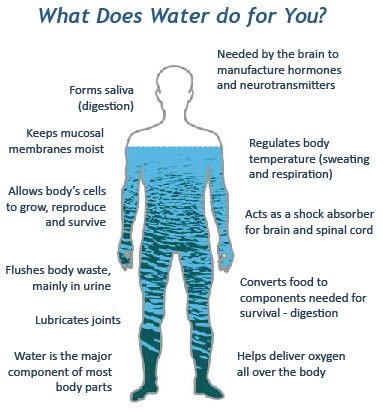
Water makes up 50-70% of the body weight, making hydration a critical component of health. Water is needed for the adequate functioning of every cell and organ.
- It regulates our body temperature by sweating and respiration.
- The carbohydrates and proteins that our bodies use as fuel are metabolized and transported by water.
- Carries oxygen to the cells.
- It assists in flushing waste mainly through urination.
- Acts as a shock absorber for body organs and keeps the eyes, nose, and mouth moist.
- Forms saliva that plays a major role in digestion and oral health.
- Lubricates joints.
- Aids digestion.
- Prevents constipation.
- Acts as a conduit for waste disposal through sweat, urine, and feces.
How much water should you drink every day?
- Eight glasses per day?
- CDC recommendation?
- US NASEM recommendation?
- By body weight?
- By thirst?
In 1945, the US Food and Nutrition Board recommended 2.5lts or 84.5 ounces of liquids per day, including the quantity in prepared food. Somehow, this last part was lost in translation, accounting for the prevalent myth of 8 glasses of water per day which has now been debunked.
The 2015–2020 U.S. Dietary Guidelines do not recommend a specific daily water or fluid intake, but they suggest that one choose plain rather than flavored water and juices.
The CDC states, “There is no recommendation for how much plain water everyone should drink daily; there are recommendations for how much daily total water intake should come from a variety of beverages and foods.”
So how much fluid does the average healthy adult need? The U.S. National Academies of Sciences, Engineering, and Medicine determined that an adequate daily fluid intake is:
- About 3.7 liters (125.11 ounces) of fluids a day for men
- About 2.7 liters (91.29 ounces) of fluids a day for women
These recommendations cover fluids from water, other beverages, and food. About 20% of daily fluid intake usually comes from food, and the rest from drinks.
Another method is simple math:
Weight (in pounds) x 0.5
Or simply stated, half your body weight in pounds is what you should drink in ounces. For example, if you weigh 200 pounds, your daily requirement will be 100 ounces of water.
However, keep in mind that the above recommendations are just that- recommendations. How much you actually need depends on multiple factors, as detailed below.
What determines the amount you need to drink?
Your individual water needs depend on multiple factors:
Activity level: The more vigorous activities you indulge in, the more your fluid requirements. However, as stated by The American College of Sports medicine, considerable interpersonal variability and related factors are involved (genetic factors, weather, and clothing worn during the exercise, for example), due to which the requirement has to be individualized.
Body weight: As your body weight increases, so do your water requirement to keep with the increased needs.
Diet: The foods that you eat also count in your fluid intake. Some food items like watermelon and cucumber account for a large volume of fluids (~90-96%). Also, soups and yogurt have high water content. Some beverages like caffeinated drinks, sodas, and low-concentration alcohol may also count.
Furthermore, a diet rich in salt will increase your water requirement.
Environment: Hot and humid climate can make you sweat and require extra fluids. Also, high altitudes with drying air, reduced oxygen, and increased urination lead to significant fluid loss.
General health: The requirements increase in instances of illnesses that lead to fluid loss, like fever, vomiting, and diarrhea. Depending on the situation, supplementation with electrolytes will also be needed. Those with heart and kidney diseases may need to limit their water intake. The need for fluids is also increased in pregnant and breastfeeding.
Is it okay to drink only when thirsty?
In the case of healthy young adults, the answer to this is a resounding yes.
(Athletes are an exception. Follow this link for more information.)
(The elderly are an exception too. A Cochrane Database review has stated that in the elderly, thirst, urine color, and other standard parameters to test for hydration are not reliable. Follow this link to know more)
The sheer pleasure of drinking when you are thirsty versus the gag, nausea, and unpleasant feeling when you are not but are forced to drink (For e.g., before an ultrasound scan) is a common experience.
A study published in the journal Proceedings of the National Academy of Sciences looked into how the brain regulates the sensation of thirst. Using MRI imaging on human test subjects, the study found that drinking when thirsty, the subjects who gave the highest pleasantness rating, showed activation of the brain area that also responds similarly to multiple positive physical and mental stimuli like touch, smell, taste, visual, and even financial reward.
On the other hand, drinking when not thirsty showed significantly increased activation of the area of the brain that clamps down on your swallowing reflex. Drinking when you are not thirsty forces you to override this instinct. The authors also remarked that,
“This mechanism could avoid excessive intake, which gives rise to hyponatremia and eventual brain edema.”
The human body is a well-tuned machine, and in healthy people, it regulates daily water balance remarkably well and will let you know you need to drink before you become at risk of being dehydrated.
So, to put it in one sentence: Drinking to satiation when thirsty is okay.
However, for this to work, drink as soon as you feel thirsty. Carry a bottle with you when you are out of the house, even if for a few minutes. Do not wait until the episode of your favorite series ends till you head to the kitchen for a glass of water. Do not finish one more chore before you grab a glass. Drink as soon as you feel thirsty.
How do you know if you are drinking enough?
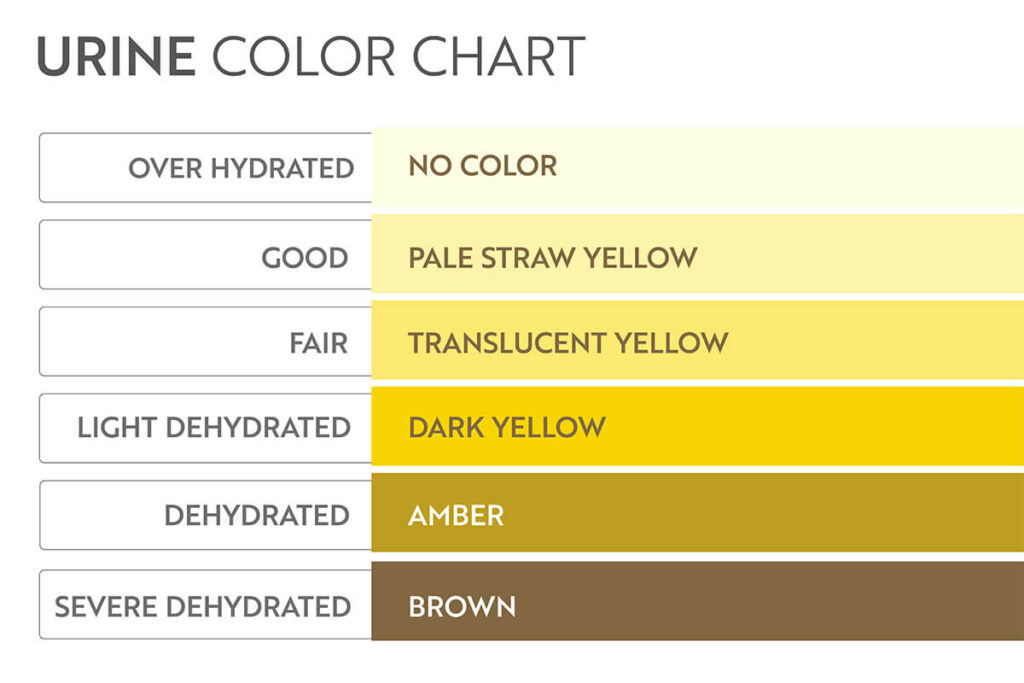
Your urine offers a straightforward and easy guide to your hydration status. Your urine color will be clear or pale yellow if you are well hydrated. Dark and strong-smelling urine clearly says otherwise.
Also, people who drink enough water will typically have softer stools.
To prevent dehydration, make plain water your beverage of choice.
(Note: some situations like diarrhea and vomiting called for electrolyte-rich water)
It’s a good idea to drink a glass of water:
- With each meal and between meals.
- Before, during, and after exercise.
- When you feel thirsty.
Should you worry about drinking too much?
People with certain health conditions like heart and kidney diseases need to monitor their fluid intake in consultation with their treating physician. In the generally healthy and well-nourished adult population, water balance is a fine-honed mechanism, and your body will try to balance the amount it excretes if there is excess fluid intake. However, this mechanism can be overwhelmed and lead to life-threatening water intoxication.
Takeaway
- Water is an important nutrient that is essential for every bodily function making hydration a crucial component of your health.
- There is no consensus on how much water one should drink daily.
- Various recommendations have been made but drinking when thirsty is a good way to go.
- Urine is a good indicator of your hydration status.
Trivia
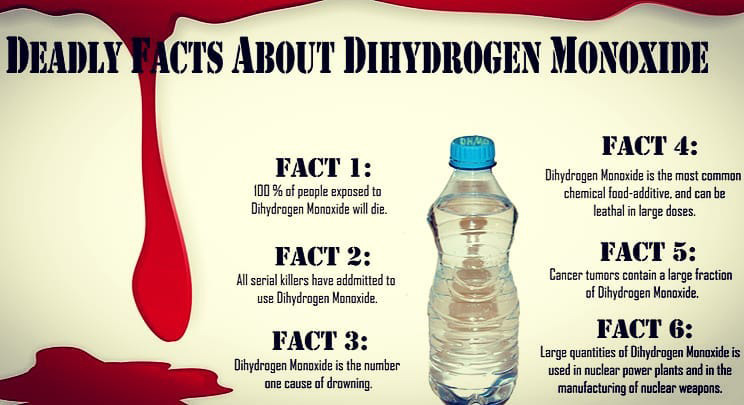
In 1997, Nathan Zohner, a high school student, as a part of his science project, “How gullible are we,” successfully got fellow students to sign his petition to ban DHMO (Dihydrogen Monoxide), which is basically two molecules of hydrogen and one of oxygen- H2O / Water!
( He now has a term coined in his honor – Zohnerism: “the use of a true fact to lead a scientifically and mathematically ignorant public to a false conclusion.”)