
In our previous posts, we discussed:
- Recommendations for daily water requirements in adults.
- Water intoxication.
- Does alcohol count as a part of your daily fluid intake?
Dehydration is the most common fluid and electrolyte disorder in both the nursing home setting and at-risk community-dwelling elders.
In this blog, we draw our attention to the daily water needs of seniors.
Quick Navigation
What does water do for you?
At over 50%of total body mass, water is the largest component of the body.
It is needed for the functioning of every cell, tissue, and organ of the body.

Why is dehydration more likely to affect seniors?
Dehydration is the most common fluid and electrolyte imbalance in seniors, and they are often at risk for a chronic state of underhydration.
The elderly population is at an increased risk of low-grade chronic dehydration.
A study found that community-dwelling older adults, under normal conditions, maintain adequate hydration; however, when challenged by physical or mental stress, they are at increased risk for dehydration and rapidly become dehydrated if they are already underhydrated.
The Lancet, in October 2022, published an article titled- A reminder to keep an eye on older people during heatwaves- which underscores the prevalence and importance of dehydration in the senior population.
Seniors are more vulnerable to dehydration due to the following reasons:
- Blunted thirst mechanism. Thirst cannot be relied upon in seniors as an indicator of fluid needs.
- Loss of muscle mass with aging leads to reduced total body water as ~75% of muscle is water.
- Decline in kidney function with aging diminishes water conservation and urine concentration ability.
- The risk of dehydration is exacerbated by co-morbidities like incontinence-associated embarrassment, which might lead one to restrict fluid or physical and mental disabilities like dementia and depression that can limit access to water.
- Many medications commonly used by seniors can lead to dehydration by multiple mechanisms like fluid loss, reduced sweating, reduced thirst sensation, and cognitive impairment. Some of these medications include but are not limited to, those used for hypertension, antidepressants, and antipsychotics.
Symptoms of dehydration
Even mild dehydration can cause an array of symptoms that, if ignored, can lead to irregularities of the heart, low blood pressure, fainting, and even death.
Recognizing the early warning signs can help you take corrective measures.
Early dehydration symptoms include:
- Dark-colored urine with a strong odor.
- Reduced frequency of urination.
- Fatigue.
- Dizziness.
- Irritability.
- Dry mouth, dry and cracked lips.
- Headache.
- Muscle cramps in legs and arms.
- Confusion and reduced alertness.
The confusion and reduced alertness may even lead to falls and injuries.
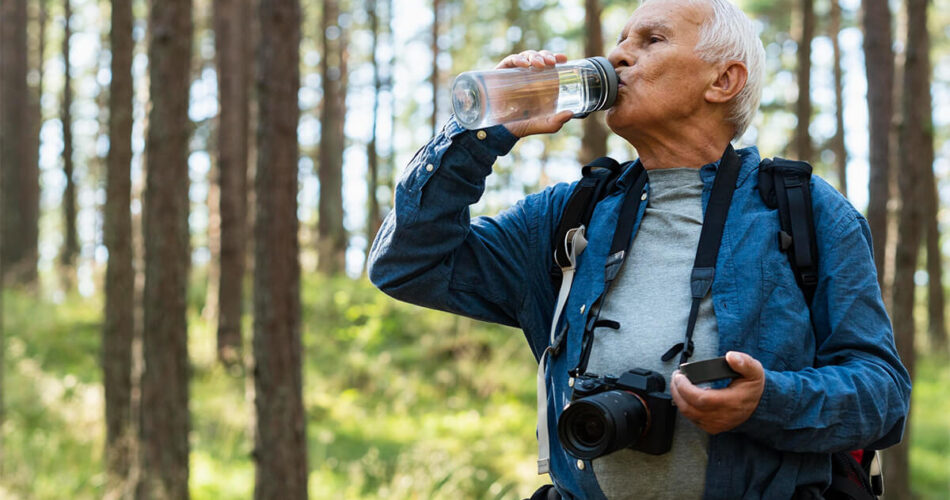
Preventing dehydration is simple- drink more water throughout the day.
So, how much water should a senior drink?
*The fluid recommendations include water and the liquid in food. Typically ~20% of your fluid requirement comes from foods.
*Plain water is the best hydrator – add a dash of lemon or infuse the water with cucumbers, berries, and other fruits and herbs to make it more palatable.
*Alcohol in any form or concentration is not counted in this as it is dehydrating.
*Coffee and tea have a mild diuretic effect and should be consumed reasonably.
There is no universally accepted single figure for the amount of water one needs to drink.
Literature is replete with recommendations which are just that- recommendations.
How much you need to drink depends on multiple factors. Illness and medications can change your fluid requirements.
Following are a few of the many recommendations:
- NCOG (Nation Council on Aging) states, ‘As a general rule, you should take one-third of your body weight and drink that number of ounces in fluids. For example, if you weigh 150 pounds (68 kgs), aim to drink 50 ounces (1.47 lts) of water each day.’ Use this conversion calculator for conversion to metric.
- ESPEN (European Society for Clinical Nutrition and Metabolism) recommends per day 1.6 lts (54.10 ounces) for females and 2.0 lts (67.62 ounces) for males.
- Chernoff recommended daily 1.5 lts (50.7ounces) for all elderly regardless of size or caloric intake.
- Schols recommended that at least 1.7 lts ( 57.4 ounces) of fluid be consumed every 24 hours.
- Suhayda & Walton recommended that older adults weighing between 50 to 80kgs have a minimum fluid intake of 1.5 lts (50.72 ounces) to 2.5 (84.53 ounces) lts per day.
How do you know you are drinking enough?
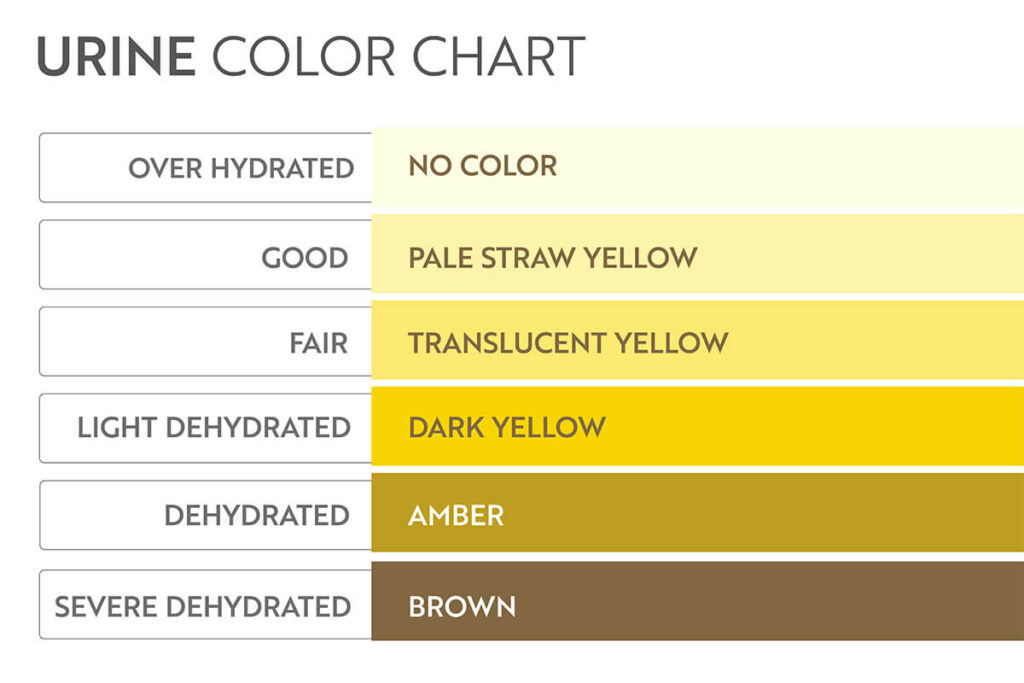
Your urine offers a straightforward and easy guide to your hydration status. Your urine color will be clear or pale yellow if you are well hydrated. Dark and strong-smelling urine clearly says otherwise.
Also, people who drink enough water will typically have softer stools.
Tips to increase your fluid intake
* Any fluid chosen should take into consideration preexisting health conditions. For e.g., sweetened drinks or juices should be avoided in drinks for diabetics and salty ones for hypertensives.
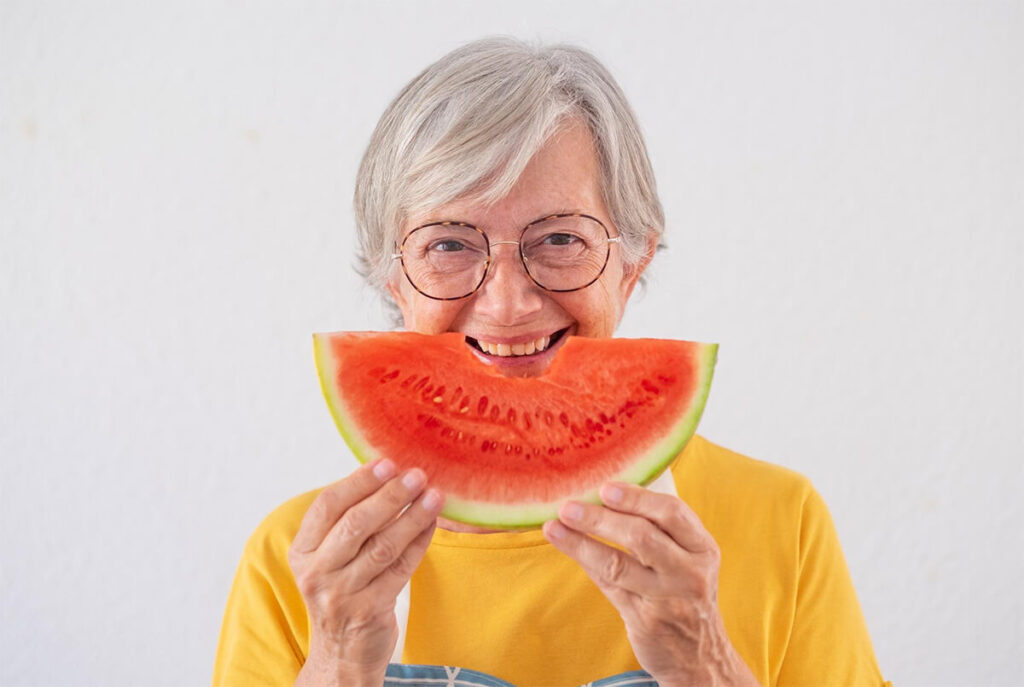
- Choose water-rich foods like melons, yogurt, soups, custards, etc.
- Carry a water bottle everywhere and take sips regularly.
- Sip small quantities of fluid frequently, as drinking a large quantity is often not palatable.
- Choose an appealing beverage (take note of the sugar and salt in it!).
- Take a full glass of water with medication instead of just a gulp.
- Make hydration a part of your routine. For e.g., drinking a glass of water as soon as one wakes up, with every meal, or every walk outside, or before going for a grocery run.
- Enhance the palatability of water by adding a dash of lemon or infusing it with cucumber, basil, and other herbs.
- Limit alcohol intake. It is counterproductive as it has a dehydrating effect and, thus, does not count in your daily fluid intake.
- If incontinence is preventing you from drinking fluids, seek help! Not drinking fluid is not the treatment for incontinence and will instead put you at risk for dehydration.
- Drink extra fluids when it is hot.
And do not forget that thirst is not a reliable indicator of hydration status in seniors.
Trivia
On 14 December 1990, the United Nations General Assembly designated October 1 as the International Day of Older Persons. The theme for the year 2022 is Resilience of Older Persons in a Changing World.