
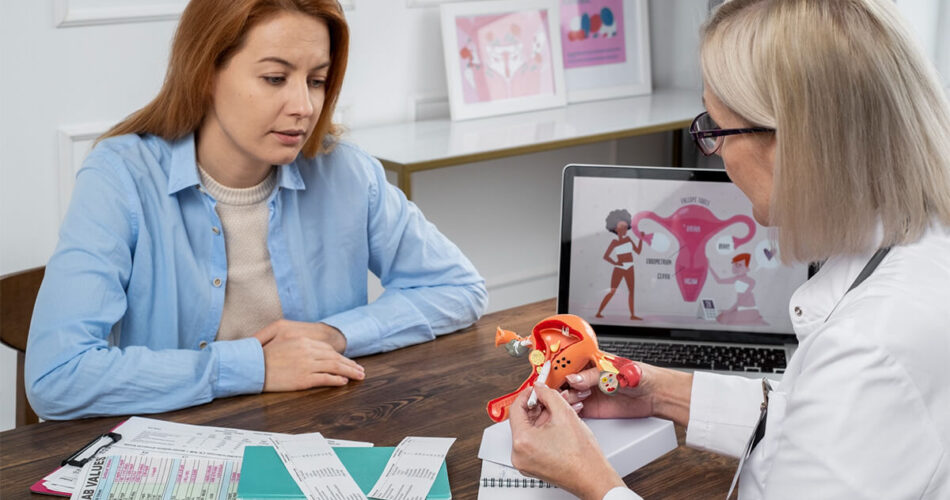
First introduced in 1943, the Pap smear is the gold standard for cervical cancer screening. Even after 80 years, during which medical science has advanced by leaps and bounds, this test, devised by Dr. George Nicholas Papanicolaou, remains the primary tool for cervical cancer screening.
Quick Navigation
- What is a Pap smear?
- Why should you get it done?
- Is Pap smear the same as a pelvic examination?
- Is Pap smear the same as the HPV test?
- Is It Painful?
- What is the process like?
- Can I do the screening test at home by myself?
- Who should get a Pap smear?
- Special Cases (Vaccination, pregnancy, HIV, surgery)?
- Who can stop Pap screening?
- Trivia.
What is a Pap smear?
The Papanicolaou (Pap) Smear Test is a simple outpatient procedure for cervical cancer screening.
In a previous post, I discussed all the available screening methods and recommendations. Click here to read the post on cervical cancer screening.
A Pap test, under the microscope, looks for the presence of precancerous cells in the cervix before they become cancerous.
The test also identifies cancerous cells.
It can also test for the presence of the Human Papilloma Virus that can cause these cancerous changes, and many centers offer this routinely with a Pap smear.
Why should you get it done?
Cervical cancer is the fourth most common cancer in women globally.
The latest available statistics (from 2020) showed an estimated 604,000 new cases and 342,000 deaths.
A Pap smear detects precancerous changes that lead to cervical cancer if not treated.
Regular Pap smears reduce your chances of getting cervical cancer.
Is Pap smear the same as a pelvic examination?
No. In the pelvic examination, through the vaginal route, your doctor will examine and feel the parts of your female reproductive system, like the ovary and uterus.
This may also include a Pap smear in the same sitting, wherein cells are gently scraped from your cervix.
But all Pap smears need not include a pelvic examination.
Is Pap smear the same as the HPV test?
No, these are two different tests, although the sample from the cervix can be collected at the same time, as both tests need gentle scraping of your cervix.
In a Pap smear, the cells are examined under the microscope for any pre-cancerous (and even cancerous) changes, whereas the HPV test detects the presence of certain strains of Human Papilloma Virus (HPV) that can increase your chances of developing cervical cancer.
Many centers routinely do both tests together, and this is known as Co-test.
Is It Painful?
As someone who has undergone the Pap smear multiple times, I can confidently say no.
Of course, sensitivity differs from person to person, but it is not a painful test.
At worst, I would use the word ‘uncomfortable.’
The specific part where the sample is taken from the cervix is quick and takes less than a minute. (The rest of the process adds to the time- read on for details)
What is the process like?
Positioning
After a preliminary consultation, you will be made to lie down on your back with your feet on stirrups.
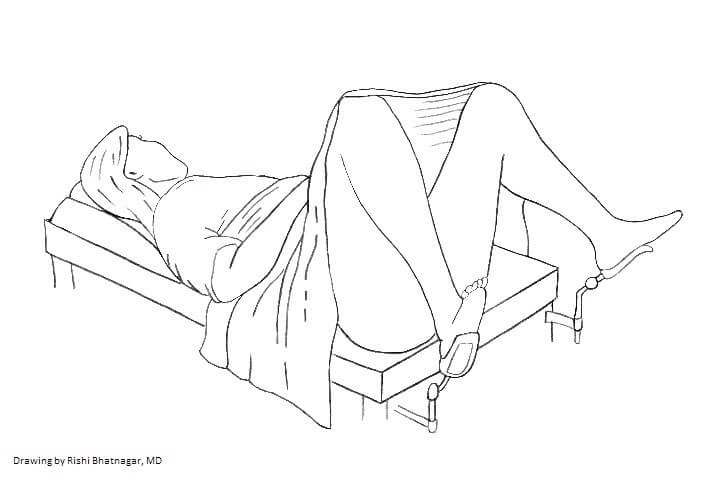
Typical position for a pelvic exam and Pap smear test.
Speculum insertion
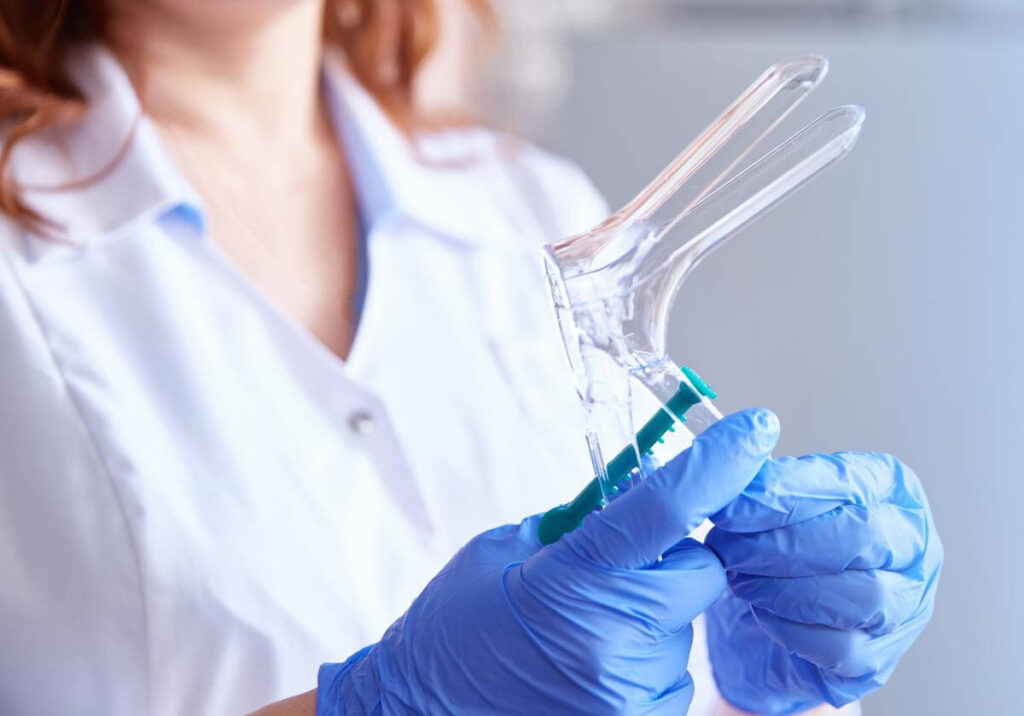
Your doctor will insert a tool called a vaginal speculum that widens your vaginal walls and give good access for the test. This is not painful, and at the most, you might feel some pressure as the speculum is placed.
Sample collection

Using a special brush and a spatula, your cervix is gently scraped to collect the cells. This is not painful and may feel slightly uncomfortable, depending on your sensitivity level.
The sample is then labeled and transported to the laboratory.
Here is a patient video resource explaining and demonstrating the various tools used.
Can I do the screening test at home by myself?
Yes, home-use test kits are available wherein you can take the sample yourself at home and send it over for analysis.
They are primarily useful in cases where appropriate health services cannot be accessed for any reason.
However, these self-sampling kits are not FDA-approved and do not replace the process done by a trained medical professional.
Click here to know about about the kits and commercially available brands.
Who should get a Pap smear?
- From the ages of 21 to 65 years, women or those assigned the female gender at birth should do a Pap test every 3 years.
- Those aged 30 years and older can do the Pap test every 5 years if combined with testing for HPV.
Special Cases (Vaccination, pregnancy, HIV, surgery)
I have had an HPV vaccination. Do I still need to undergo regular screening?
You will still need to undergo age-specific screening because:
- The vaccine does not protect against all strains of HPV.
- You might have been exposed to HPV before you were vaccinated, and the vaccine does not treat the infection you already have.
- Vaccination does not guarantee 100% immunity against a disease.
I am pregnant and my screening is due. Should I?
Cervical Screening Tests have not been linked to increased miscarriage rates. Furthermore, once the baby is born, it might be harder for you to take time out. If you undergo screening after pregnancy, ideally wait for 3 months post-delivery as the cervical cells may still be inflamed. Contact your gynecologist for more details on this.
I have had a hysterectomy. Do I still need to be screened?
- had a hysterectomy as part of treatment for high-grade cervical abnormalities or cervical cancer,
- had a previous high-grade cervical abnormality,
- had cervical abnormalities detected during hysterectomy.
I am HIV positive. How does that change my screening schedule?
Pap smear is the primary mode of screening
Ages 21 to 29 should have a Pap test at the initial time of HIV diagnosis.
If normal, the next testing is at 12 months.
If 3 consecutive Pap smears are normal, then follow-up Pap tests are recommended every 3 years.
For more information on this topic, click here to go to the CDC website.
Who can stop Pap screening?
The following groups may consider stopping Pap smear screening:
Older age
Those older than 65 years with no past history of cervical change
+
Within the past 10 years:
3 negative Pap tests in a row
Or
2 negative HPV tests in a row
Or
2 negative co-tests in a row
(The most recent Pap test should have been done in the past 3 years, and the HPV or the co-tests within the past 5 years)
After a total hysterectomy
Generally, after a total hysterectomy (removal of the whole uterus + cervix) for a non-cancerous condition, a Pap smear (or any cervical cancer screening) is not needed.
However, discuss with your doctor to decide what is best for you based on your risk factors.
Trivia
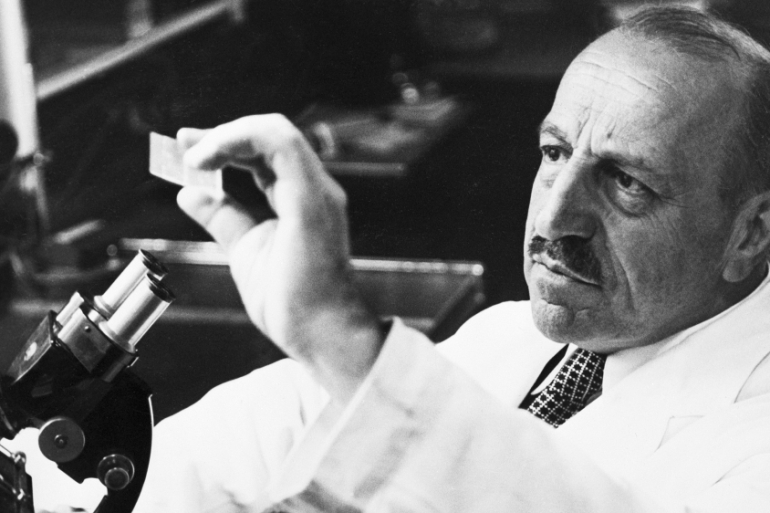
George Nicholas Papanicolaou was Born on May 13, 1883, on the island of Euboea, Greece. Son of a physician father, he graduated from medical school with top honors. He and his wife, Mary, arrived in New York on October 13, 1913, with no money (except a little over 250USD- the amount required to enter the USA) and no prior arrangement for employment. In The Big Apple, Dr. Papanicolaou found various employments as a rug salesman, violin player, a clerk at a Greek newspaper.
In 1914, he received a position at New York University’s Pathology Department and Cornell University Medical College’s Anatomy Department, where his wife joined him as a technician.
The namesake test that he devised in 1943 continues to be the Gold Standard for cervical cancer screening even after 80 years.
He died at the age of 78 on February 19, 1962
In his honor, the Miami Cancer Institute was renamed the Papanicolaou Cancer Research Institute.